Tiger, The Striped Hunter of Asia’s Forests and Grasslands
A tiger moving through tall grass can seem to disappear between one step and the next. Its orange coat catches the sunlight, but its dark stripes break the outline of its body into fragments of shadow. Behind that familiar pattern is an animal shaped by the demands of hunting large prey, raising vulnerable cubs, and navigating a landscape shared with other predators and people.
The tiger, scientifically known as Panthera tigris, is the largest living cat species. Yet size alone does not explain its success. Patience, concealment, powerful forelimbs, sensitive hearing, and an ability to learn from experience all contribute to its survival. A tiger must repeatedly secure enough food while avoiding injuries that could end its hunting career.
Tigers also reveal how closely the survival of a predator depends on the wider environment. They need prey, water, shelter, and room to move. A forest may look healthy from a distance but offer little protection if its deer and wild pigs have disappeared. A reserve may support breeding females but remain vulnerable if roads and settlements isolate it from neighboring populations.
This guide explores tiger identification, classification, habitats, hunting, social behavior, reproduction, and conservation. It also explains why tiger population figures sometimes appear to conflict—and why the question of how many tiger subspecies exist requires a careful answer.
Tiger Facts
| Feature | Tiger facts |
|---|---|
| Common name | Tiger |
| Scientific name | Panthera tigris |
| Animal group | Mammal |
| Family | Felidae |
| Genus | Panthera |
| Natural distribution | Asia |
| Diet | Carnivorous; primarily medium and large mammals |
| Typical adult social pattern | Mostly solitary, with important exceptions |
| Main hunting approach | Stalking followed by a short ambush |
| Identifying features | Dark stripes, orange to yellowish coat, pale underside, muscular body |
| Female name | Tigress |
| Young | Cubs |
| Gestation | Approximately 100 days |
| Common litter size | About two to four cubs; smaller and larger litters occur |
| Independence | Often around 18–24 months, with variation |
| Wild longevity | Commonly described as roughly 12–15 years; many die younger |
| Global conservation status | Endangered |
| Subspecies classification | Two-subspecies and six-living-subspecies frameworks both appear in scientific and conservation work |
1. What Is a Tiger?
A tiger is a large predatory cat native to Asia. It belongs to the same genus as lions, leopards, jaguars, and snow leopards, but it has a distinctive combination of vertical stripes, powerful proportions, and predominantly solitary hunting behavior.
Calling a tiger a carnivore describes its diet. Calling it a predator describes how it obtains much of that food. Calling it an apex predator describes its position near the top of the food web. These terms overlap, but each answers a different question about the animal’s life.
An adult tiger usually hunts independently. That independence makes physical condition especially important. A damaged paw, broken canine, or serious infection can reduce its ability to capture prey. Unlike a predator that regularly hunts cooperatively, it generally cannot rely on a group to provide meals.
The tiger is also a conservation flagship: an animal whose public recognition can attract support for protecting habitats and wildlife. Its value extends beyond that role, however. The needs of a living tiger connect directly to the survival of prey species and the management of large natural landscapes.
Understanding tigers therefore requires looking beyond strength and appearance. Their lives involve repeated decisions about energy, risk, movement, and reproduction.
2. Scientific Classification
The tiger’s scientific name is Panthera tigris. Scientific names help distinguish species consistently across languages and regions.
| Taxonomic rank | Classification |
|---|---|
| Kingdom | Animalia |
| Phylum | Chordata |
| Class | Mammalia |
| Order | Carnivora |
| Family | Felidae |
| Subfamily | Pantherinae |
| Genus | Panthera |
| Species | Panthera tigris |
Membership in the order Carnivora does not, by itself, mean an animal eats only meat. That order also contains species with varied diets. Tigers, however, are specialized meat eaters whose feeding anatomy reflects their dependence on animal prey.
The species name is widely accepted. Most classification disagreements concern the divisions within the species: its subspecies.
A subspecies is a geographically associated subdivision that researchers distinguish using evidence such as genetics, physical characteristics, and evolutionary history. Scientists may agree that populations differ while disagreeing about whether those differences justify formal subspecies names.
This distinction matters when reading tiger information. A source using two subspecies and another using six are not necessarily describing different animals. They may be organizing the same populations under different taxonomic frameworks.
3. Identification, Size, and Appearance
The striped coat
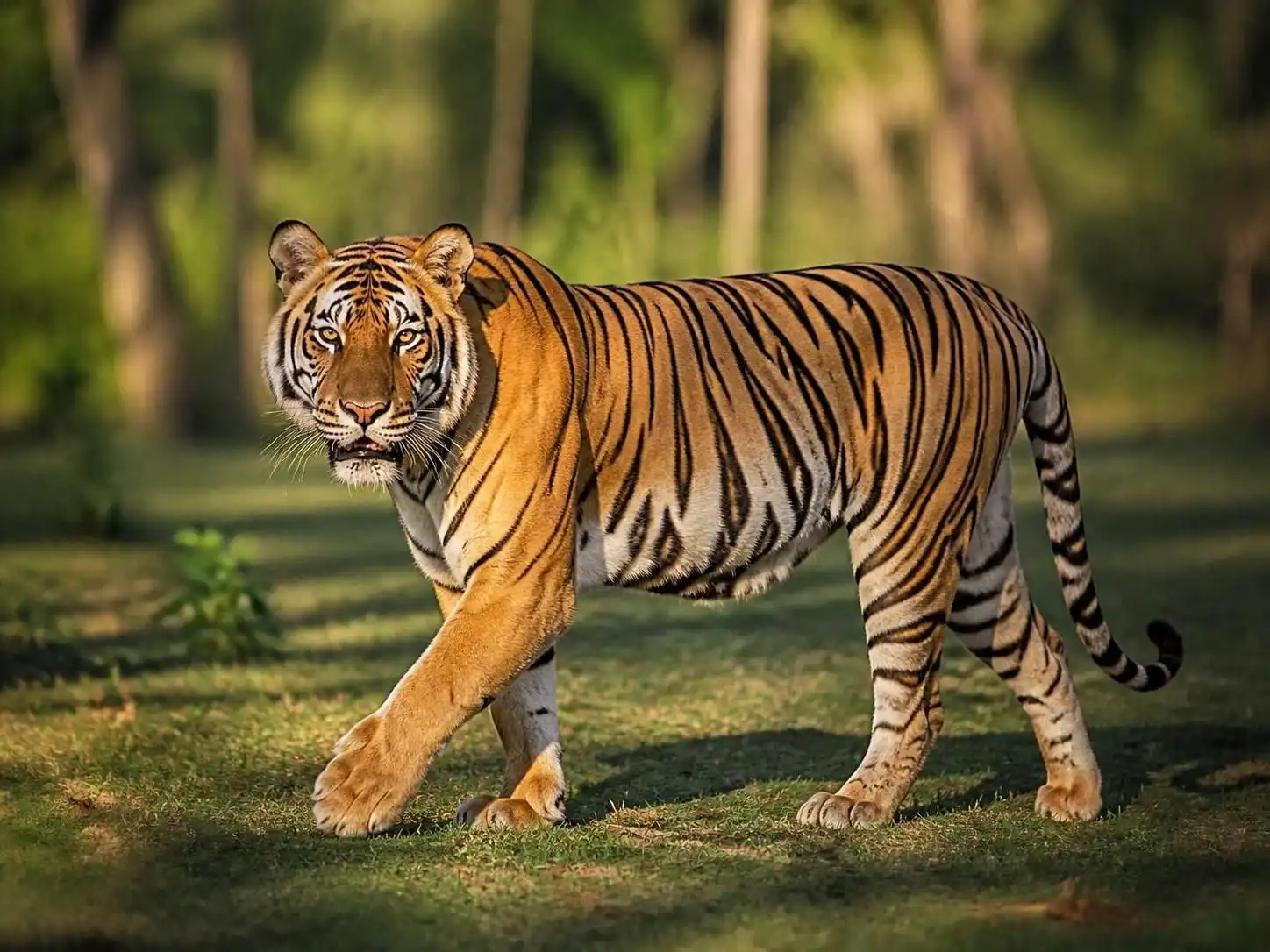
The familiar tiger coat has dark stripes over an orange, reddish, or yellowish background. The underside and parts of the face are pale. The ears have dark backs with conspicuous light markings.
Stripes vary in width, spacing, branching, and arrangement. An individual’s pattern is sufficiently distinctive to help researchers recognize it in photographs.
The pattern on one side is not simply a mirror image of the other. For monitoring, clear photographs of both flanks can therefore be especially useful.
Body shape and sexual differences
Tigers have a broad head, strong neck, deep chest, and substantial shoulders. The forelimbs are particularly important for gripping and controlling struggling prey.
Males are generally larger and heavier than females from the same population. Nevertheless, a photograph without scale can be misleading. Posture, camera angle, coat thickness, and body condition all affect apparent size.
Published size summaries also differ because they combine different populations and measurement methods. One zoological synthesis gives adult body-weight ranges of approximately 100–261 kilograms for males and 75–177 kilograms for females. These figures should be treated as reference ranges, rather than fixed limits for every tiger.
White and unusually dark tigers
White tigers are color variants, not a separate species or subspecies. The familiar white coat with retained stripes is not ordinary albinism.
Some tigers appear unusually dark because their stripes are broad and closely spaced. Such appearances should not automatically be described as evidence of an entirely black tiger population.
Color is only one part of an animal’s biology. Breeding for an unusual appearance does not necessarily preserve the genetic diversity, behavioral abilities, or geographic ancestry needed for conservation.
4. Tiger Subspecies and the Classification Debate
The answer to “How many tiger subspecies are there?” depends on the framework being used.
The two-subspecies framework
The IUCN Cat Specialist Group’s 2017 classification recognized two broad tiger subspecies:
| Subspecies | Populations grouped within it |
|---|---|
| Panthera tigris tigris | Continental populations, including Bengal, Amur, Indochinese, Malayan, South China, and the extinct Caspian population |
| Panthera tigris sondaica | Sunda Island populations, including Sumatran and the extinct Javan and Bali populations |
This approach groups tigers into continental and Sunda divisions. It does not imply that all continental populations are genetically or ecologically identical.
The six-living-subspecies framework
Other research supports recognizing six surviving lineages as subspecies. A whole-genome study published in 2018 found six distinct genetic groupings corresponding to the familiar living forms. Earlier genetic research also supported a six-unit arrangement.
| Common name | Name used in the six-subspecies framework | Main geographic association |
|---|---|---|
| Bengal tiger | P. t. tigris | Indian subcontinent |
| Amur tiger | P. t. altaica | Russian Far East and northeastern China |
| Indochinese tiger | P. t. corbetti | Mainland Southeast Asia |
| Malayan tiger | P. t. jacksoni | Malay Peninsula |
| South China tiger | P. t. amoyensis | Historically southern China; surviving captive population |
| Sumatran tiger | P. t. sumatrae | Sumatra |
“Living” requires particular care for the South China tiger. Its survival in captivity does not establish that a breeding wild population remains.
Why the disagreement matters
Subspecies decisions depend partly on the evidence sampled and the standards used to interpret differences. Historical specimens can be scarce, and some populations declined before modern genetic studies became possible.
The IUCN Cat Specialist Group states that its classification is under review. A responsible account should therefore identify the framework it follows instead of presenting either arrangement as universally settled.
For practical conservation, recognizable populations still matter under either framework. Their geographic origins, genetic diversity, and environmental histories should inform management.
5. Wild Tiger Population Estimates Explained
Tiger population numbers require dates and definitions. A single undated figure can conceal major differences in what was estimated.
Recent global figures
| Reporting context | Estimate | Interpretation |
|---|---|---|
| IUCN assessment published in 2022 | 3,726–5,578 wild tigers, excluding cubs | Estimated range rather than an exact global count |
| Same IUCN assessment | 2,608–3,905 mature individuals; best estimate about 3,140 | Separate estimate of the reproductively mature population |
| Global Tiger Forum estimate announced in 2023 | Approximately 5,574 wild tigers | Later global estimate reported by WWF |
| WWF reporting for 2025 | Approximately 5,711 wild tigers | More recent headline estimate, also cited by India’s government in July 2026 |
These figures come from different reporting contexts. The 2025 figure should not be described as a count conducted in October 2026 merely because this article was checked then.
Total estimates and mature individuals
A mature-individual estimate concerns animals capable of reproduction under the assessment’s definitions. It excludes dependent young and may differ from a broader estimate that includes independent but not yet mature animals.
The 2022 IUCN broader estimate explicitly excludes cubs. Calling it an estimate of “all tigers of every age” would therefore be inaccurate.
Nor should the mature estimate be subtracted from a later global estimate to calculate the number of young tigers. The years, methods, and population definitions differ.
Better counting versus biological growth
A higher estimate can reflect real recovery, improved monitoring, or both. Surveying previously poorly sampled areas may reveal tigers that were already present.
IUCN explicitly cautioned that improved monitoring contributed to the increase reported in its 2022 reassessment. Comparing headline figures alone cannot establish a precise rate of biological growth.
Wild and captive populations
Captive tigers must be counted separately. They live under human care and do not automatically contribute to breeding populations in natural habitats.
Global captive totals are also difficult to compare because record keeping varies among facilities and countries. A large captive population does not demonstrate that the wild species is secure.
6. Where Tigers Live
Wild tigers survive in scattered parts of Asia. Their remaining distribution is fragmented, with populations separated by agriculture, infrastructure, settlements, or extensive areas where the species has disappeared.
Ten countries are generally identified as retaining breeding wild populations: Bangladesh, Bhutan, China, India, Indonesia, Malaysia, Myanmar, Nepal, Russia, and Thailand.
Conditions differ greatly among them. A country can contain a major stronghold, a small isolated population, or a cross-border population dependent on habitat in a neighboring state.
South Asia
India supports the largest national wild tiger population. Its official 2022 estimation placed the population at approximately 3,682.
Tigers also occur in Nepal, Bhutan, and Bangladesh. Landscapes in this region include lowland grasslands, forests, foothills, and the Sundarbans mangroves. India’s figure is a dated national estimate and should not be presented as a new 2026 census result.
Southeast Asia and Sumatra
Remaining populations occur in parts of Thailand, Myanmar, and Peninsular Malaysia, while Indonesia’s surviving wild tigers are confined to Sumatra.
The disappearance of tigers from many former Southeast Asian strongholds shows why global recovery can coexist with serious regional losses.
Northeastern Asia
Amur tigers inhabit the Russian Far East and parts of northeastern China. Their environment includes cold winters and seasonal snow.
National borders are human boundaries, but tiger movements can cross them. Conservation planning must therefore consider connected habitat rather than treating every national population as biologically separate.
Historical range
Tigers once occupied a much broader Asian distribution. Historical range maps should be labeled clearly: former occurrence does not mean tigers still survive there.
A shaded country on a broad map may also give a false impression of continuous occupation. Local evidence provides a more useful picture.
7. Tiger Habitats
Tigers are associated with forests, but they are not restricted to one forest type. Their habitats include tropical forests, seasonally dry forests, tall grasslands, mangroves, and temperate woodland.
The common requirements are functional: adequate prey, concealment, access to water, and conditions that permit survival and reproduction.
Tropical and seasonal forests
Dense vegetation can provide concealment during an approach to prey. However, vegetation alone is insufficient. A forest emptied of large mammals may offer little food for a tiger.
Seasonal changes also matter. Water availability, leaf cover, fire, and prey movements can alter how an animal uses its surroundings.
Grasslands and floodplains
Tall grass can conceal a tiger surprisingly well. Floodplain mosaics may combine grass, woodland, wetlands, and riverbanks within a single hunting landscape.
Managing such places requires attention to the whole mosaic. Protecting one vegetation type while allowing surrounding habitat to deteriorate may weaken the system supporting prey.
Mangroves
The Sundarbans demonstrate the tiger’s ability to occupy tidal environments. Channels and shifting water levels make these landscapes very different from dry inland reserves.
Conservation there must account for both ecological change and the needs of people whose livelihoods depend on the same waterways.
Temperate forests
Northern tiger habitats include forests that experience severe winters. Sparse prey can require an animal to travel widely.
Habitat quality should therefore be assessed through what it allows tigers to do. A landscape that supports movement but little feeding may function as a passage, while a prey-rich area may support breeding.
These roles are complementary rather than interchangeable.
8. Diet and Feeding
Tigers are obligate carnivores. Their main food consists of other animals, particularly hoofed mammals.
Major prey
Across different regions, important prey include deer, wild pigs, and wild cattle. The exact species vary with geography.
A tiger in South Asia does not encounter the same prey community as one in the Russian Far East or Sumatra. “Tiger diet” is consequently a regional subject as well as a species-level one.
Smaller animals may be eaten opportunistically, but listing every recorded prey item can obscure the central point: sustaining a breeding tiger population normally requires a dependable supply of substantial prey.
Why prey size matters
Large prey can provide several meals, but capturing it involves risk. A successful hunt must offer enough energy to justify the effort and danger.
The largest available animal is not necessarily the best target. Age, condition, position, cover, and the likelihood of detection affect the opportunity.
Feeding is irregular
Wild tigers do not receive a fixed daily ration. They may feed heavily after a kill and then experience an interval before the next substantial meal.
An average daily consumption figure should not be interpreted as a schedule. Food needs also change when a female supports growing cubs.
Livestock and food shortages
Tigers sometimes kill livestock. The circumstances differ: vulnerable husbandry practices, proximity to cover, depleted wild prey, or an individual’s condition may contribute.
Explaining those circumstances is more useful than assuming all livestock losses have one cause. Prevention depends on identifying the local pattern and addressing the conditions that make attacks possible.
9. How Tigers Hunt
Tiger hunting usually depends on getting close before the prey detects danger.
Finding an opportunity
A tiger may travel along routes used by prey, investigate sounds, or pause where cover offers a favorable approach.
The process involves more than seeing an animal and charging. Distance, wind, vegetation, and the prey’s alertness all influence whether an attempt is worthwhile.
Stalking
During a stalk, the tiger reduces its visible profile and uses cover to shorten the gap. A slow approach can conserve the opportunity for a brief attack.
If prey detects the tiger too early, continuing may waste energy. Abandoning an unfavorable approach can be a sensible outcome.
The ambush
The final rush is generally short. Forelimbs and claws help seize the prey, while the bite used depends partly on its size and position.
Smaller prey may be killed with a bite around the neck. Large prey are commonly restrained while the tiger applies a throat bite.
The broad pattern is concealment, approach, and sudden attack. Individual encounters vary, and a single dramatic recording should not be treated as a universal sequence.
Success and risk
Claims that tigers succeed at one exact percentage of hunts should be treated cautiously. Studies may use different definitions of an attempt, and observation conditions vary.
For the tiger, avoiding injury is a repeated priority. Even a successful kill can be costly if the struggle causes lasting damage.
That balance helps explain the importance of patience. Hunting efficiency includes knowing when to wait, withdraw, or select another opportunity.
10. Adaptations for Survival
A tiger’s abilities work together. No single feature explains its effectiveness.
Concealment and body control
Stripes disrupt the body’s outline, while controlled movement reduces the chance of detection. The usefulness of camouflage depends on the surrounding light, vegetation, and viewing angle.
A motionless tiger partly hidden in grass presents a different visual problem from one standing in the open.
Forelimbs, claws, and teeth
Strong forequarters help pull and hold prey. Claws provide grip, and long canines help secure a killing bite.
These structures also require protection. Teeth and claws are working tools; damage can have consequences for feeding and survival.
Sensory information
Hearing, vision, smell, and touch provide different kinds of information. A sound may reveal nearby movement, scent may indicate another tiger’s presence, and close-range contact helps during prey handling.
The animal must integrate those signals in surroundings where visibility is often limited.
Water and movement
Tigers are capable swimmers and may enter water to cross channels or cool themselves. Swimming ability, however, does not remove the risks posed by strong currents, steep banks, or unfamiliar conditions.
An ability should not be confused with unlimited endurance.
Adaptation has limits
The tiger’s anatomy suits its way of life, but it cannot compensate indefinitely for missing prey or unsafe habitat.
This is a useful distinction when considering conservation. Protecting an animal means preserving the conditions under which its adaptations remain effective. Strength cannot overcome every human pressure.
11. Behavior, Communication, and Territory
Mostly solitary, but socially aware
Adult tigers generally travel and hunt alone. Mothers with dependent cubs are the most obvious exception.
Solitary living does not mean a tiger lacks social information. It may repeatedly encounter evidence of neighbors and adjust its movements accordingly.
Home ranges and territories
A home range is the area an animal uses during its normal activities. A territory is an area it defends. The terms are related but should not always be used interchangeably.
Male ranges often overlap those of several females. Range size varies with prey, habitat, sex, and neighboring animals.
A single area measurement cannot represent every tiger. A prey-rich landscape may support closer spacing than a region where food is scarce.
Scent and sound
Tigers communicate through scent marks, scratches, vocalizations, and posture. These signals can convey presence or reproductive condition and may reduce the need for direct confrontation.
Roaring is only one part of their vocal repertoire. Quieter sounds also occur during close interactions.
Daily activity
Tigers can be active by day or night. Prey schedules, temperature, disturbance, and local conditions influence their behavior.
Describing them as exclusively nocturnal oversimplifies this flexibility.
Conflict and tolerance
Territorial encounters can cause serious injury. Yet not every encounter becomes a fight, and some individuals tolerate one another in particular circumstances.
The costs of injury help explain why communication and avoidance matter. Social behavior includes managing distance as well as making contact.
12. Reproduction and Breeding
Tigers do not generally maintain permanent breeding pairs. A male and female may associate during mating before returning to more independent activity.
Maturity and mating
Females commonly reach sexual maturity around three to four years of age; males typically mature around four to five.
Maturity does not guarantee immediate reproductive success. An animal must also survive, find a mate, and occupy circumstances that allow breeding.
Mating can occur throughout the year, although local seasonal patterns exist. Tigers are induced ovulators, meaning mating stimulates the process leading to egg release.
Pregnancy and birth
Gestation lasts approximately 100 days. Litters commonly contain two to four cubs, although both smaller and larger litters are recorded.
The female selects a sheltered birth site and provides the main direct care. A suitable site offers concealment, but the mother must still leave periodically to obtain food.
Breeding intervals
A female raising surviving cubs invests a long period in them. If a litter is lost, she may reproduce sooner than a female whose young remain dependent.
A fixed statement that every tigress breeds at exactly the same interval would therefore be misleading.
Reproduction and population recovery
Births are only the beginning of recovery. Cubs must survive, reach independence, find space, and eventually reproduce.
Counting litters without following their outcomes can give an incomplete picture. A population with repeated births but poor juvenile survival may remain vulnerable despite frequent photographs of cubs.
13. Cub Development
Tiger cubs begin life dependent on their mother for nourishment, warmth, protection, and later access to prey.
Early weeks
Newborn cubs have closed eyes and limited mobility. Their eyes generally open during the first two weeks.
The mother faces a difficult balance: staying close protects the cubs, but hunting is necessary to sustain herself and milk production.
She may move them if a den becomes unsuitable or disturbed.
The transition to meat
Cubs begin trying solid food while still nursing. Learning to eat meat is different from learning to capture it.
During development, play offers opportunities to practice stalking, pouncing, balance, and gripping. These behaviors gradually become useful in more demanding situations.
Learning to hunt
Young tigers accompany their mother and gain experience around prey. Physical growth, practice, and opportunity all influence progress.
There is no single day when every cub becomes a competent hunter. A young tiger may show parts of the hunting sequence well before it can support itself consistently.
Independence and dispersal
Independence often occurs around 18–24 months, although timing varies. Dispersal then exposes young tigers to unfamiliar terrain and established adults.
The transition can be especially difficult where safe habitat is disconnected. A tiger capable of hunting still needs somewhere to live.
| Developmental stage | Approximate timing |
|---|---|
| Eyes open | Usually within the first two weeks |
| First solid food | Around two months |
| Weaning | Commonly within roughly three to six months |
| Increasing hunting experience | Throughout later cub development |
| Independence | Often around 18–24 months |
These are approximate milestones, not deadlines.
14. Lifespan and Causes of Death
Tiger longevity is often summarized as around 12–15 years in the wild, but that description needs context. Many individuals die much younger.
A maximum recorded age, an expected adult lifespan, and average survival from birth answer different questions. They should not be substituted for one another.
Risks across life stages
Cubs face dependence on a single primary caregiver. If their mother dies, their prospects can deteriorate rapidly.
Dispersing young tigers face unfamiliar areas and possible conflict with established adults. Mature animals face hunting injuries, territorial fights, disease, and human pressures.
A population’s survival pattern therefore reflects several stages rather than one uniform annual risk.
Aging and hunting
Older tigers may experience declining physical condition or dental wear. Those changes can make prey capture more difficult.
However, age alone does not explain every unusual behavior. An individual assessment requires evidence about health, food availability, and circumstances.
Captive longevity
Tigers under professional care can live into their late teens or twenties. Regular feeding, veterinary treatment, and reduced exposure to some wild hazards can extend survival.
Longer life in captivity does not make captive and wild populations ecologically equivalent. Their environments, risks, reproductive management, and contributions to free-ranging ecosystems differ.
For readers, the most useful approach is to treat longevity figures as context-dependent summaries. A healthy adult’s potential lifespan tells only part of the story of a species whose young face substantial challenges before maturity.
15. Predators and Competitors
Healthy adult tigers generally have no regular natural predator. That does not make them immune to danger.
Other tigers
Conflict with another tiger can cause serious injury or death. Dependent cubs may also be killed by males, particularly during changes in territorial occupancy.
These interactions connect population stability with social conditions. Losing an established adult can affect more than the one animal removed.
Dangerous prey
Large prey can defend themselves with horns, hooves, teeth, or body weight. A tiger’s ability to kill an animal does not make the encounter safe.
An injury that initially appears survivable may later impair hunting or become infected.
Other carnivores
Tigers may share landscapes with leopards, dholes, bears, and other predators. Relationships vary among regions and encounters.
Competition can involve food, space, or access to a carcass. It does not always require direct fighting.
Coexistence may also involve differences in prey selection, habitat use, or activity. Predators sharing a landscape are not necessarily performing identical roles.
Humans
Human activities pose a much greater conservation threat than any routine natural predator. Direct killing, prey removal, and habitat transformation can affect entire populations.
Comparing animals through hypothetical fights offers little insight into these pressures. The meaningful question is how real interactions influence survival and reproduction.
This perspective also avoids portraying a tiger as invulnerable. Its position in the food web does not protect it from risks outside the evolutionary conditions in which its hunting abilities developed.
16. Ecological Importance
Tigers influence ecosystems through predation and through their interactions with other animals.
Predation and prey behavior
Killing prey directly affects individual animals. The possibility of encountering a tiger may also influence where prey feed or move.
The wider ecological result depends on local conditions. Herbivore numbers are shaped by food, weather, disease, hunting, and other predators as well as tigers.
It is therefore too simple to claim that every forest becomes overgrazed immediately after tigers disappear. Ecological relationships require local evidence.
Benefits of protecting tiger landscapes
Tigers need substantial habitat and prey. Protecting those requirements can benefit many other organisms living in the same area.
This is why tigers are often called umbrella species. Conservation directed toward their needs can provide broader protection.
However, the umbrella is not automatic. Wetlands, small habitat specialists, and species with different requirements may still need targeted attention.
Human benefits and responsibilities
Healthy natural landscapes can support water systems, livelihoods, and cultural values. Tiger conservation can contribute to those benefits when habitat protection is effective and local people are treated fairly.
The connection should be demonstrated rather than assumed. A project’s ecological success and its social effects both deserve evaluation.
Protecting tigers is consequently a landscape task. It involves prey management, habitat condition, movement routes, and human relationships alongside the survival of the cats themselves.
17. Threats to Tigers
Poaching and illegal trade
Tigers are killed for illegal markets involving their bodies and parts. Wildlife crime can remove breeding animals from populations that are already small.
TRAFFIC’s analysis covering 2000 through June 2025 documents continuing illegal trade, including whole animals. Seizures demonstrate detected trafficking; they do not measure every tiger killed or transported illegally.
A change in seizure totals may reflect changing trade, enforcement effort, detection, or several factors together.
Loss of prey
Hunting of deer, wild pigs, and other prey can weaken tiger populations even where forest cover remains.
This creates a conservation problem that satellite images alone may miss. Trees can remain standing while the food web is depleted.
Habitat loss and fragmentation
Land conversion removes habitat. Fragmentation divides what remains and can make movement more dangerous.
A 2023 study found an approximately 11% reduction in the area of mapped Tiger Conservation Landscapes between 2001 and 2020. That result concerns a defined landscape dataset and time period; it should not be presented as an annual rate or a direct percentage decline in tiger numbers.
Conflict with people
Livestock losses and attacks on people can produce serious hardship and retaliatory killing. Effective conservation must address those harms directly.
Residents need practical support, credible information, and timely responses. Expecting communities to absorb all costs can undermine long-term cooperation.
Small, isolated populations
Isolation can restrict gene flow and leave populations vulnerable to chance events. A single disease outbreak or the loss of several breeding females may have disproportionate consequences.
These pressures often reinforce one another. A landscape can become smaller, less prey-rich, and more dangerous at the same time.
18. Conservation and Recovery
Tiger conservation succeeds through sustained work across several connected needs.
Protect adults and prey
Preventing avoidable deaths is essential, especially for breeding animals. Ranger support, intelligence, investigations, and effective responses to wildlife crime all contribute.
Prey protection must accompany tiger protection. A reserve cannot support recovery indefinitely if the animals tigers eat continue to decline.
Maintain connected habitat
Protected areas can serve as strongholds, while surrounding habitat and corridors allow dispersal.
A corridor must work on the ground. Its value depends on safe passage, suitable cover, and manageable levels of disturbance.
Infrastructure planning should consider wildlife movement before construction. Retrofitting a severely disrupted landscape may be harder and more expensive.
Support coexistence
Better livestock protection, reliable loss verification, compensation where appropriate, and trained response teams can reduce conflict.
Local knowledge is also valuable. Residents may recognize seasonal movement patterns or recurring danger points that broad maps miss.
Conservation should give people meaningful roles in decisions affecting their land and livelihoods.
Learn from documented recovery
In 2024, the Wildlife Conservation Society reported strong tiger recovery in Thailand’s Western Forest Complex during 2007–2023. Its explanation emphasized sustained protection and recovery of prey.
That example supports a practical lesson: long-term protection of the whole system can produce measurable results. It does not establish that every landscape will recover at the same rate.
Use translocation carefully
Moving tigers may help restore populations under suitable conditions, but releasing animals does not remove the original threats.
A defensible project needs secure habitat, adequate prey, appropriate animals, community engagement, and monitoring. These requirements should be established before release.
Measure more than abundance
A fuller assessment considers breeding success, survival, distribution, connectivity, prey, and conflict.
A higher total is encouraging, but recovery is more secure when populations also occupy viable, connected landscapes. Conservation should aim for the conditions that allow future generations to persist.
19. How Scientists Study Tigers
Studying an elusive carnivore requires several methods.
Camera traps
Remote cameras photograph passing animals. Researchers can use stripe patterns to recognize individuals and record repeated detections.
A photograph establishes presence at a location and time. It does not, by itself, establish the size of the surrounding population.
Population estimation
Repeated detections can be analyzed with statistical models that account for animals missed by cameras.
The distinction between a minimum photographed count and an estimated population is important. Both can be useful, but they are different results.
A sound report explains survey coverage, sampling dates, age definitions, and uncertainty.
Genetic evidence
DNA from suitable samples can help identify animals, investigate relatedness, and study movement between populations.
Such work depends on sample quality and careful laboratory procedures. Genetic evidence complements other methods rather than eliminating the need for field surveys.
Tracking movement
Collars can provide detailed information about selected animals’ movements. Their use involves capture, equipment, animal welfare considerations, and research authorization.
Tracked animals are a sample of the population. Researchers must consider whether their behavior represents other individuals.
Prey and habitat monitoring
Counting tigers without examining prey and habitat leaves major questions unanswered. Monitoring should help explain why a population changes, not simply report that it changed.
India’s monitoring programs combine information on tigers, other predators, prey, and habitat. The broader principle is useful everywhere: interpret the predator within the ecological system that supports it.
20. Tigers Compared with Other Big Cats
Comparisons are most useful when they explain differences in ecology.
| Feature | Tiger | Lion | Leopard |
|---|---|---|---|
| Typical adult social organization | Mostly solitary | Commonly pride-based | Mostly solitary |
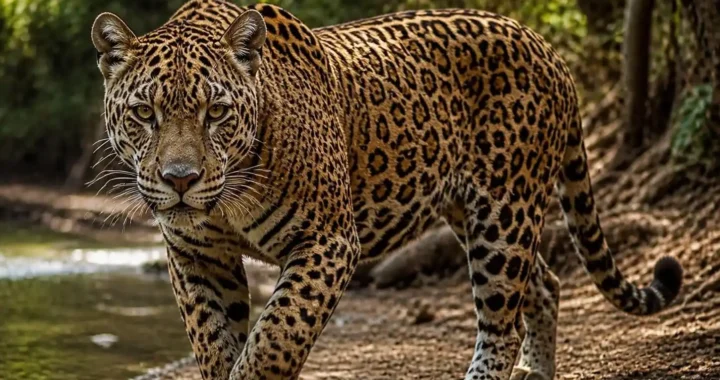
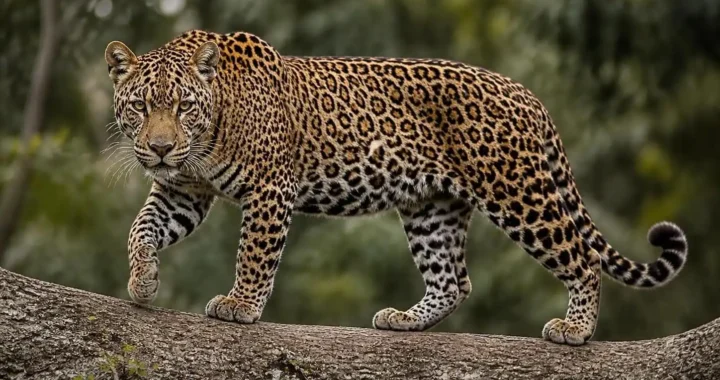
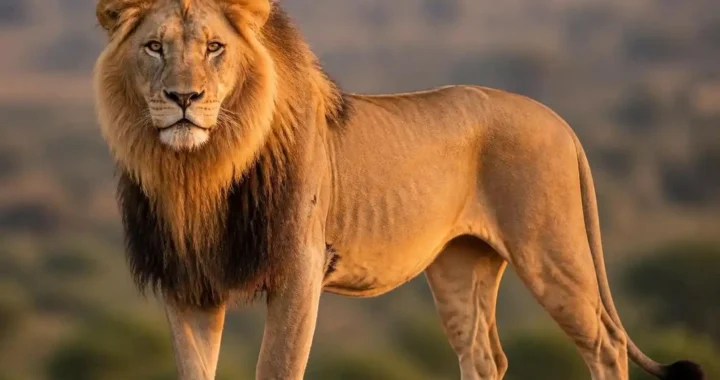
| Familiar coat pattern | Stripes | Mostly plain tawny coat | Rosettes |
| General hunting pattern | Usually solitary ambush | Cooperative and solitary hunting | Usually solitary ambush |
| Geographic association | Asia | Mostly Africa, with an Asian population in India | Africa and Asia |
| Useful comparison | Large-prey specialist across varied Asian habitats | Social organization strongly shapes daily life | Flexible predator with broad habitat use |
These are broad patterns. Individuals and populations show variation.
Why strength rankings mislead
Questions about which cat would win a fight remove the animals from their normal ecological circumstances.
Age, sex, body condition, motivation, and surroundings would affect any encounter. There is no conservation value in presenting a universal winner.
Comparing how animals obtain food or share space explains much more.
Tiger and leopard coexistence
Where tigers and leopards occur together, their relationship can involve competition and differences in resource use.
A smaller predator may use different prey, locations, or activity periods. The details depend on local conditions.
This illustrates an important ecological principle: species can overlap without using every resource in the same way.
Hybrids and conservation
Captive hybrids do not replace naturally reproducing tiger populations. A striking appearance does not establish conservation value.
Conservation priorities concern viable populations, appropriate ancestry, welfare, and functioning habitat. Those questions are more useful than novelty.
21. Common Tiger Myths
“All tigers live in tropical jungle”
Tigers occupy several habitat types, including temperate forests and mangroves. Their distribution is limited by more than temperature or vegetation alone.
“White tigers are a separate endangered species”
White tigers are color variants. Their appearance should not be confused with a separate species-level conservation category.
“A higher estimate proves the exact number of new tigers born”
Population estimates are affected by survey methods and coverage. Biological growth must be distinguished from improved detection.
“Every tiger is a danger-seeking animal”
Tigers are powerful predators, but their behavior involves avoiding unnecessary risk as well as pursuing food. Human encounters need careful, case-specific assessment.
“A protected-area boundary guarantees safety”
Legal designation is a starting point. Effective management, prey, enforcement, and conditions beyond the boundary also matter.
“Captive breeding alone can solve wild tiger decline”
Breeding animals does not restore habitat or remove poaching. Captive conservation programs have specific roles, but wild recovery requires functioning landscapes.
“One exact number describes tiger biology”
Litter size, home range, lifespan, and body mass all vary. Ranges and context often describe the species more accurately than a memorable single figure.
These distinctions help readers assess claims without dismissing useful information. The aim is to ask what a figure measures, where it applies, and what evidence supports it.
22. Frequently Asked Questions About Tigers
What is the scientific name of the tiger?
The tiger’s scientific name is Panthera tigris. It belongs to Felidae, the cat family. Its species identity is widely accepted, while scientists continue to debate how some geographic populations should be classified below the species level.
How many tigers remain in the wild?
WWF reports approximately 5,711 wild tigers for 2025. This is a dated estimate, not an exact live count. The 2022 IUCN assessment used a different reporting framework, estimating 3,726–5,578 wild individuals excluding cubs.
What does “mature individuals” mean?
It refers to the reproductively mature population under the assessment’s definitions. It differs from a broader population estimate that may include independent younger animals. Always compare the age categories, dates, and methods before treating two figures as equivalent.
How many tiger subspecies exist?
Two broad subspecies were recognized in the IUCN Cat Specialist Group’s 2017 classification. Other genetic research supports six living subspecies. The classification remains under review, so a careful answer identifies the framework being used.
Which tiger is the largest?
Amur and Bengal populations include very large tigers. Males are generally larger than females. Claims about the largest individual require reliable measurements and clear separation of wild animals from captive animals, whose body conditions can differ.
Are white tigers albinos?
The familiar white tiger with dark stripes is not an ordinary albino. It has a genetically influenced color variation. White tigers are not a separate species or subspecies, and breeding for coat color is not equivalent to restoring wild populations.
Where do tigers live naturally?
Tigers are native to Asia. Remaining wild populations occur in scattered areas from the Indian subcontinent and Southeast Asia to the Russian Far East. Their presence within a country is usually localized rather than continuous.
What do tigers eat?
Their main prey includes deer, wild pigs, and other medium or large mammals. Diet varies by region and available prey. Smaller animals may be taken opportunistically, but substantial wild prey is central to supporting most breeding populations.
Do tigers hunt every day?
They do not follow a fixed daily hunting schedule. The interval between kills depends on factors such as prey size, feeding opportunities, hunting success, and whether a female is supporting cubs. A large meal may be followed by a longer interval.
Can tigers swim?
Yes. Tigers are capable swimmers and may enter water to travel or cool themselves. The ability does not mean all water crossings are safe; currents, distance, weather, and access to banks still matter.
Are tigers nocturnal?
Tigers can be active during daylight and darkness. Their schedules vary with prey activity, heat, disturbance, and local conditions. Describing them as strictly nocturnal overlooks this flexibility.
Do tigers live in groups?
Adults usually live and hunt independently. Mothers remain with dependent cubs, and males and females associate during mating. Other temporary interactions occur, so “solitary” describes the main pattern rather than an absolute rule.
How long is a tiger pregnant?
Gestation lasts approximately 100 days. This is a general guide, not an exact duration for every pregnancy. A female commonly gives birth to two to four cubs, although the full recorded litter range is wider.
How long do cubs stay with their mother?
Independence often occurs around 18–24 months, with variation. Cubs need time to grow and develop effective hunting skills. Becoming independent also requires finding usable habitat, which can be difficult in fragmented landscapes.
Do male tigers raise cubs?
The mother provides the main direct care. It would be misleading to describe regular shared parenting as the standard pattern. Interactions involving males vary, and some males can pose a serious threat to dependent cubs.
How long do tigers live?
Wild longevity is commonly summarized as roughly 12–15 years, though many die younger. Captive tigers may survive into their late teens or twenties. Maximum age and average survival should always be distinguished.
What animals kill tigers?
Healthy adults have no regular natural predator, but other tigers can kill them. Large prey can cause fatal injuries, and cubs face additional dangers. Human activities are the dominant concern for conservation at the population level.
Why are tigers endangered?
Major pressures include poaching, illegal trade, loss of prey, habitat loss, fragmentation, and conflict with people. These threats can interact. A population may lose animals directly while its remaining habitat becomes less capable of supporting reproduction.
Can captive tigers be released into the wild?
Release requires much more than opening an enclosure. Appropriate behavior, health, ancestry, prey, habitat security, and conflict risks must be assessed. Captive birth alone neither proves suitability nor rules out every possible conservation role.
How can people help tiger conservation?
Support credible habitat and wildlife protection, avoid products made from tiger parts, and choose wildlife experiences that prioritize welfare. Accurate communication also helps: retain dates on population estimates and avoid sharing unsupported claims about recovery.