Jaguar, The Powerful Spotted Hunter of the Americas
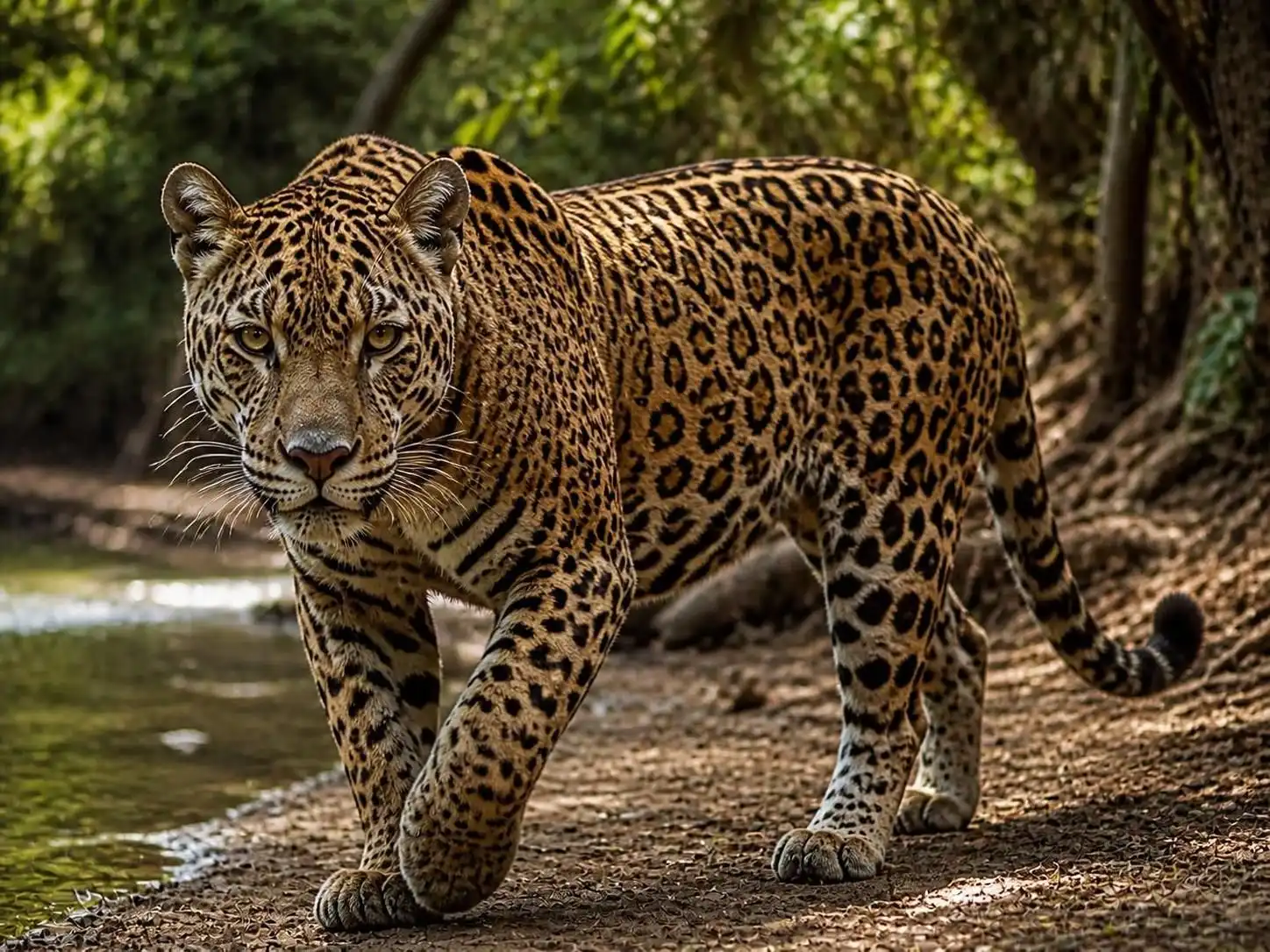
A jaguar moving along a riverbank seems built for the landscape around it. Its broad paws find purchase on muddy ground, its spotted coat blends into broken shade, and its muscular body carries it through vegetation that would slow a larger, longer-legged animal. When the river interrupts its route, the jaguar can enter the water and continue.
This is the largest living cat native to the Americas. Known scientifically as Panthera onca, the jaguar combines a robust build, powerful jaws, and a flexible hunting strategy. Depending on where it lives, its prey may include forest mammals, wetland animals, fish, and armored reptiles.
Yet the jaguar’s story extends beyond strength. A female must feed herself while protecting dependent cubs. A young animal must find a place to live after leaving its mother. An established adult must navigate seasonal changes, neighboring predators, and increasingly fragmented habitat.
Conservation presents another challenge: jaguars can be relatively numerous in one major stronghold while facing disappearance elsewhere. Their global status does not describe every regional population equally well.
This guide explores jaguar identification, classification, habitat, distribution, feeding, hunting, behavior, reproduction, and conservation. It also explains why jaguar population estimates differ, what scientists mean when they describe the species as having no generally recognized living subspecies, and how black jaguars fit into the picture.
Jaguar Facts
| Feature | Jaguar facts |
|---|---|
| Common name | Jaguar |
| Scientific name | Panthera onca |
| Animal group | Mammal |
| Family | Felidae |
| Genus | Panthera |
| Natural distribution | The Americas |
| Distinction | Largest living cat native to the Americas |
| Typical appearance | Robust body, broad head, spotted coat with rosettes |
| Dark color form | Melanistic jaguar, often called a black panther |
| Diet | Carnivorous; prey varies by habitat |
| Main hunting approach | Stalking and ambush |
| Social pattern | Mostly solitary, with documented exceptions |
| Gestation | Approximately 100 days |
| Litter size | Usually one or two cubs; up to four reported |
| Maternal dependence | Commonly around 18–24 months, with variation |
| Wild longevity | Often summarized as approximately 12–15 years |
| Captive longevity | Can reach or exceed 20 years |
| Global IUCN category | Near Threatened |
| Living subspecies | Generally treated as a monotypic species |
1. What Is a Jaguar?
A jaguar is a large predatory cat native to the Americas. It is the only living member of the genus Panthera naturally occurring there.
Jaguars are especially recognizable for their compact strength. They have substantial shoulders, a deep body, a broad head, and comparatively short legs. Their proportions suit close-range attacks and the control of struggling prey.
Like other cats, jaguars are obligate carnivores. Animal food supplies their essential nutritional needs. They are also predators, meaning they actively capture other animals rather than relying entirely on scavenging.
The jaguar is often described as an apex predator. This identifies its position near the top of the food web, but it does not mean every individual is safe from injury or death. Cubs are vulnerable, adults can injure one another, and prey can defend themselves.
A jaguar’s success involves much more than completing an attack. It must locate food repeatedly, avoid unnecessary damage, and obtain enough energy to maintain its condition.
For a breeding female, that challenge expands to include offspring. Her survival and hunting ability directly affect whether her cubs reach independence.
Understanding the jaguar therefore means connecting its physical abilities with the practical demands of living in a changing landscape.
2. Scientific Classification and Subspecies
The jaguar’s scientific name is Panthera onca.
| Taxonomic rank | Classification |
|---|---|
| Kingdom | Animalia |
| Phylum | Chordata |
| Class | Mammalia |
| Order | Carnivora |
| Family | Felidae |
| Subfamily | Pantherinae |
| Genus | Panthera |
| Species | Panthera onca |
Are there jaguar subspecies?
Older classifications divided jaguars into several geographic subspecies. These divisions were based partly on differences in body size, skull measurements, coat appearance, and location.
Recent widely used classifications generally treat the jaguar as monotypic: a species without formally recognized living subspecies.
The IUCN Cat Specialist Group describes geographic genetic structure while recognizing the jaguar as one monotypic species. Geographic groups and formally named subspecies are different concepts.
Does monotypic mean identical?
No. Jaguars from different regions can differ genetically and physically without being assigned separate subspecies names.
This matters for conservation. Animals from distant populations should not automatically be considered interchangeable simply because they share one species name.
What about fossil jaguars?
Fossil classifications concern extinct forms and require separate evaluation. Names appearing in paleontological literature should not be presented as additional living jaguar subspecies.
Classification summarizes evidence about relationships. It does not remove the need to protect regional diversity.
3. Jaguar Identification and Appearance
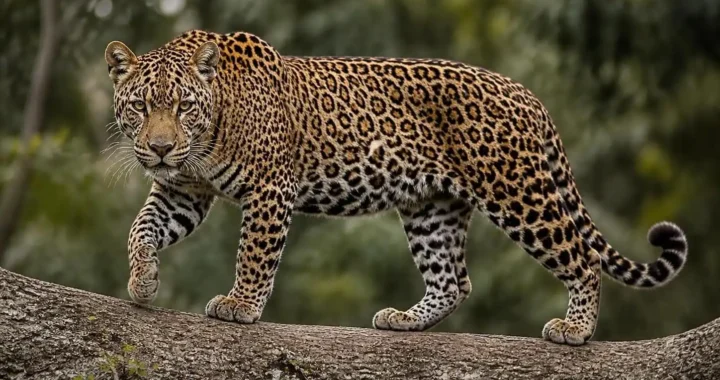
Most jaguars have a golden, yellowish, or tawny background coat marked with dark rosettes. Their underside is paler.
Rosettes and internal spots
Jaguar rosettes are often large and irregular, with one or more dark spots inside. This is a useful distinction from the typically smaller, less internally spotted rosettes of leopards.
However, a single rosette is not a perfect identification test. Patterns vary across the body and among individuals.
A reliable identification considers the whole animal: its head, proportions, tail, coat, and geographic location.
Head and body
The jaguar’s broad face and substantial jaws give it a different appearance from a leopard. Its body is generally stockier, and its tail is proportionally shorter.
These differences can be difficult to judge in a close-up photograph. Perspective may hide the body features needed for comparison.
Individual markings
A jaguar’s coat pattern can help researchers recognize it in camera-trap images. Clear views of the flanks are particularly useful.
The pattern on the left side differs from the right, so researchers need to avoid treating photographs of opposite sides as different animals.
Camouflage in practice
Rosettes help break up the outline against uneven light and vegetation. Concealment also depends on posture and movement.
A stationary jaguar in broken shade presents a much less obvious shape than the same animal standing against an open background.
4. Size and Geographic Variation
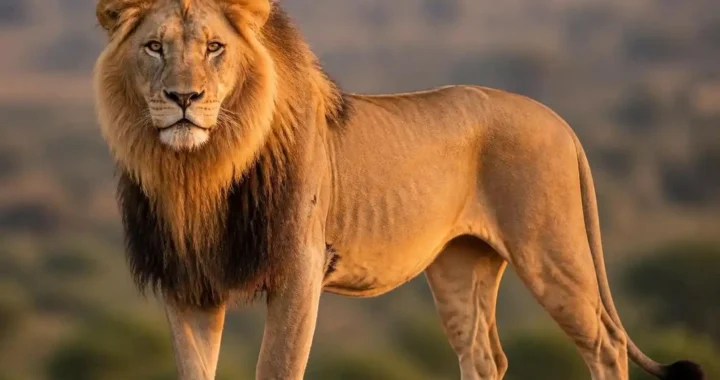
Jaguars are the third-largest living cat species overall, after tigers and lions. Individual size nevertheless varies substantially.
Males and females
Males are generally larger and heavier than females from the same population. Their heads and shoulders can appear particularly substantial.
Sex differences should be assessed within geographic context. A large female from a relatively large-bodied population may overlap in size with males from smaller-bodied populations.
Regional differences
Jaguars associated with the Pantanal include notably large individuals. Other populations contain smaller animals.
A zoological synthesis gives a broad reference weight range of approximately 57–113 kilograms, but this does not include every recorded adult or define absolute limits.
Why measurements disagree
Some sources combine sexes, while others separate them. Some report typical adults, and others emphasize unusually large individuals.
Length measurements can also differ depending on whether the tail is included.
A meaningful comparison should use the same measurement method and biological category.
Fossil context
The fossil record shows that jaguars once had a wider distribution, and some prehistoric forms were larger than living populations.
This evolutionary history helps explain why the species should not be understood solely through its modern rainforest image. The jaguar’s past includes environments and geographic areas beyond its present strongholds.
5. Black Jaguars and Melanism
A black jaguar is a jaguar with melanism, a genetically influenced increase in dark coloration.
The animal may appear almost uniformly black, but the rosettes often remain visible under suitable lighting.
Is a black jaguar a different species?
No. Black and normally colored jaguars belong to Panthera onca.
Color variation alone does not establish a different species or subspecies. Other kinds of evidence are needed to evaluate evolutionary divisions.
Why the name “black panther” causes confusion
“Black panther” is an informal expression commonly used for melanistic jaguars and melanistic leopards.
A black cat in the Americas may be a jaguar, while a similar-looking animal in Africa or Asia may be a leopard. The informal name does not resolve the identification.
Does color determine behavior?
A dark coat does not establish that an individual is unusually aggressive, stronger, or a different kind of hunter.
Those claims need independent evidence. Appearance can influence human expectations without demonstrating a behavioral difference.
Photographing a black jaguar
Exposure and side lighting can reveal the rosette pattern. In deep shadow, those markings may be difficult to see.
This illustrates why an animal’s apparent color in one image should not be treated as a complete description of its biology.
Did you know? A black jaguar can retain a patterned coat even when the rosettes are nearly invisible from a distance.
6. Where Jaguars Live
Jaguars occur from Mexico through parts of Central and South America, with occasional individuals documented in the southwestern United States.
Their distribution is fragmented rather than continuous.
Mexico and Central America
Remaining habitat includes tropical forests, seasonally dry forests, and other connected landscapes.
The Maya Forest region is an important stronghold. Elsewhere, narrow links between larger habitat areas can be crucial for movement.
South America
The Amazon Basin supports the largest broad stronghold. Jaguars also occur in landscapes including the Pantanal, Cerrado, Chaco, and Atlantic Forest region.
These names describe very different environments. A jaguar in a seasonally flooded wetland faces different daily conditions from one in a dry forest.
Northern and southern limits
Range edges often involve smaller or more isolated populations. Their status cannot be inferred from the size of the Amazonian stronghold.
Oxford’s WildCRU identifies the Amazon, Pantanal, and Mayan Forest as major remaining population areas while emphasizing increasing isolation elsewhere.
Jaguars in the United States
Recent documented animals have generally been interpreted as dispersers from Mexico.
An individual crossing a border demonstrates movement and habitat use. It does not establish a viable breeding population.
Maintaining connections to northern Mexico is consequently important when considering the jaguar’s prospects in the southwestern United States.
7. Jaguar Habitat
Jaguars occupy more than tropical rainforest. Suitable environments include wetlands, wooded savannas, dry forests, scrub, and some mountainous landscapes.
What matters is the combination of food, cover, water, and conditions that permit survival.
Forest habitat
Dense vegetation can provide concealment and shelter. However, forest cover alone does not reveal whether sufficient prey remains.
A forest can retain its trees while hunting pressure removes many of the animals supporting predators.
Wetlands
Floodplains and river systems provide access to aquatic and terrestrial prey.
Seasonal water levels can alter travel routes, concentrate animals, or change where dry resting sites are available.
Dry environments
Jaguars also use seasonally dry landscapes. There, the distribution of water and prey may strongly influence movement.
Protecting only the wettest or most visually impressive habitat would overlook these populations.
Habitat mosaics
A useful landscape may include several vegetation types. One area can supply feeding opportunities while another provides shelter or passage.
These roles should be evaluated together.
Human-modified areas
Jaguars may move through working landscapes, but passage is not the same as secure breeding habitat.
Conservation needs to determine whether animals survive their use of those areas and whether the landscape remains connected over time. The U.S. Fish and Wildlife Service emphasizes the species’ broad habitat use alongside continuing habitat loss and fragmentation.
8. Jaguar Population Estimates Explained
The widely quoted estimate of approximately 173,000 jaguars comes from a modeling study published in 2018.
It should not be described as a worldwide census conducted in 2026.
What the 2018 study estimated
Researchers combined information about density and distribution to predict abundance across the species’ range.
The study estimated approximately 173,000 jaguars, with an uncertainty interval of roughly 138,000–208,000. Most were predicted to occur in the Amazon Basin.
| Figure or description | Meaning | What it does not mean |
|---|---|---|
| Approximately 173,000 | Central estimate from a 2018 model | Every jaguar was individually counted |
| Roughly 138,000–208,000 | Reported uncertainty around that estimate | A measured decline or increase between those numbers |
| Regional survey estimate | Estimate for a defined area and period | Automatically comparable with every other survey |
| Mature individuals | Reproductively mature population under stated definitions | All animals of every age |
| Captive population | Jaguars under human care | Additional members of a wild breeding population |
Why other totals appear
Other analyses use different assumptions, geographic boundaries, or methods. Their results should not be merged into one supposedly precise global figure.
Mature versus broader estimates
The 173,000 figure should not be relabeled as a mature-individual estimate without checking the original definitions.
Interpreting change
Differences between estimates can reflect actual population change, improved detection, different coverage, or model revisions.
To measure a trend, researchers need methods and areas that are sufficiently comparable.
9. Jaguar Diet and Feeding
Jaguars eat a wide variety of animals. Their diet reflects local opportunity rather than one fixed menu.
Mammalian prey
Important prey can include peccaries, deer, capybaras, armadillos, and other mammals.
The significance of each species varies. A prey animal recorded in one study may be absent from another region.
Reptiles and other animals
Jaguars also take caimans, turtles, and other reptiles. Fish and birds can contribute to the diet.
Their ability to use these foods broadens the range of feeding opportunities, particularly in wetlands.
Why prey lists can mislead
A list of everything a jaguar has eaten does not show how much each food contributes.
Researchers distinguish occasional records from major dietary components. The age and size of prey also matter.
Saying jaguars eat a large animal species does not mean they routinely kill its largest adults.
Food intake
Wild feeding is irregular. A jaguar may eat substantially after a successful hunt and then experience an interval before another large meal.
Energy requirements vary with body size, activity, pregnancy, lactation, and dependent cubs.
Livestock
Some jaguars kill livestock, creating serious conflict. The circumstances need local investigation.
Understanding where, when, and why losses occur provides a better basis for prevention than assuming all jaguars have identical feeding habits.
10. How Jaguars Hunt
Jaguars generally hunt through stalking and ambush rather than prolonged pursuit.
Finding an approach
The animal must locate prey and assess whether it can close the distance without detection.
Vegetation, terrain, wind, and the prey’s alertness influence the opportunity.
The attack
A jaguar uses its powerful body and forelimbs to seize and restrain prey. The final approach is typically brief compared with the time spent locating a suitable chance.
A missed attack can end quickly. Continuing an unfavorable chase may waste energy or increase danger.
The distinctive bite
Jaguars are known for bites directed around the head and neck, including bites that penetrate the skull in some prey.
That behavior is distinctive, but it should not be described as the method used in every kill.
Prey anatomy, size, and position affect how an encounter unfolds.
Armored prey
Their robust skull and teeth are relevant when dealing with animals such as turtles.
However, the presence of these abilities does not make every armored animal an easy or safe target.
Risk and reward
A successful hunt must supply enough food to justify the effort and danger.
An injury to a paw, jaw, or canine can impair later hunting. Patience and prey selection therefore contribute to survival alongside strength.
11. Jaguar Adaptations
Jaguar adaptations work together rather than functioning as independent superpowers.
A robust body
Substantial forequarters help during close contact with prey. A low, muscular build supports forceful movement through dense cover.
Paws and claws
Broad paws provide support, while retractile claws help grip during climbing and prey capture.
These structures require protection. An injured paw can affect every subsequent movement.
Jaws and teeth
The broad head accommodates powerful jaw muscles. Canines secure prey, while specialized cheek teeth process flesh.
Popular bite-force rankings often compare different measurements or estimates. A single dramatic number is less informative than understanding how the anatomy is used.
Camouflage
Rosettes disrupt the outline in uneven light. Concealment is most effective when paired with controlled movement and a suitable background.
Sensory information
Vision, hearing, smell, and touch contribute different information. A jaguar must combine them to judge distance, detect movement, and investigate its surroundings.
Behavioral flexibility
An animal can adjust where it moves, when it hunts, and which prey it pursues.
That flexibility is valuable, but it does not remove dependence on adequate resources.
A useful conservation perspective asks whether the environment still allows these adaptations to work. Physical strength cannot indefinitely compensate for missing prey, dangerous roads, or repeated killing.
12. Jaguars and Water
Water is an important part of many jaguar landscapes.
Jaguars are capable swimmers and can cross waterways, travel along banks, and hunt animals associated with aquatic environments.
Waterways as routes
A river may create an obstacle in one place and a travel corridor in another.
Banks can offer movement routes, while nearby vegetation provides concealment.
Seasonal flooding
Flooding changes the distribution of dry ground and prey. An animal may use different parts of its range as water levels rise or fall.
This means habitat quality can change seasonally without the vegetation disappearing.
Aquatic food resources
A study at Taiamã Ecological Station in Brazil found extensive use of fish and aquatic reptiles.
The research demonstrated that an abundant aquatic food supply could affect jaguar density and social behavior. It did not establish that fish dominate every jaguar population’s diet.
Why this matters
An animal described mainly as a terrestrial predator can still depend heavily on aquatic resources in particular places.
Conservation must therefore consider river condition, flood cycles, and wetland connectivity.
Protecting a patch of forest while allowing surrounding water systems to deteriorate may fail to preserve the ecological processes supporting its jaguars.
13. Behavior and Communication
Jaguars are usually encountered alone, but solitary living does not mean a complete absence of social information.
Scent marking
Urine, scrapes, and other signs can advertise presence.
These signals allow animals to exchange information without meeting directly.
Vocalizations
Jaguars produce powerful calls and a range of closer-contact sounds. Vocal activity can be associated with reproductive communication or interactions between animals.
A call’s meaning depends on context rather than its loudness alone.
Activity patterns
Jaguars may be active during darkness, daylight, or twilight.
Their schedules vary with prey, weather, disturbance, and location. A population frequently observed during the day should not be assumed to represent every jaguar landscape.
Resting
Resting sites provide shade, shelter, and opportunities to monitor the surroundings.
A motionless animal may still be responding to sounds or movements that observers do not notice.
Behavioral interpretation
One short video provides a narrow view. It may show an unusual interaction, an exceptional food opportunity, or an animal accustomed to a particular setting.
Understanding normal behavior requires repeated observations across individuals and circumstances.
That is especially important for an elusive species whose most dramatic moments are much more likely to be filmed and shared than ordinary periods of travel or rest.
14. Social Interactions: More Than a Strictly Solitary Cat
“Mostly solitary” remains a useful description of jaguars, but “never social” is inaccurate.
Familiar associations
Mothers remain with dependent cubs. Males and females associate during mating.
Young littermates may also remain together temporarily.
Male associations
Research has documented repeated associations and coalition-like behavior among some male jaguars.
These observations challenge a rigid view that every adult male interaction must be hostile.
A 2022 study examined collaborative behavior and male coalitions. Its findings should not be expanded into a claim that all jaguars regularly hunt cooperatively.
Local conditions matter
Food abundance, population density, familiarity, and relatedness can influence tolerance.
A productive wetland may create different opportunities for association from a landscape where food is scattered.
What remains uncertain?
Researchers continue to investigate how common these patterns are and how they affect breeding or resource access.
The appropriate conclusion is that jaguar social behavior is more flexible than a simple label suggests.
This is a useful lesson in wildlife biology: a broad category describes the dominant pattern, while long-term observation reveals the exceptions and conditions that give the pattern its meaning.
15. Home Ranges and Dispersal
A home range is the area an animal uses during normal activities. A territory is an area it defends.
The two terms overlap in everyday writing but are not exact synonyms.
Range size
Jaguar home ranges vary with prey, habitat, season, sex, and neighboring animals.
A single figure cannot adequately describe the species across forests, wetlands, and dry country.
Overlap
Ranges may overlap even when animals avoid being in the same place at the same time.
A map of overlapping locations therefore does not prove frequent direct contact.
Dispersal
Young jaguars eventually become independent and may leave their birth area.
Finding food is only one challenge. They must also find usable space and survive movement through unfamiliar environments.
Connectivity
A corridor links habitat areas, but its usefulness depends on actual conditions.
Vegetation visible on a map may conceal roads, fences, concentrated human activity, or places where jaguars are repeatedly killed.
Why reserves need connections
A reserve can support breeding and still become isolated over time.
Panthera’s Jaguar Corridor Initiative focuses on maintaining physical and genetic connections among populations. The goal is a functioning network, not simply a series of separate protected patches.
16. Jaguar Reproduction
Jaguars do not generally maintain permanent breeding pairs.
A receptive female and a male may associate temporarily, then return to more independent activity.
Reproductive maturity
Females commonly mature earlier than males. Broad summaries often place female maturity around two to three years and male maturity around three to four.
These figures describe general patterns, not fixed deadlines for every animal.
Maturity also differs from successful reproduction. An animal must survive, find a mate, and experience suitable conditions.
Pregnancy
Gestation lasts approximately 100 days.
A female selects a sheltered birth site, which may involve dense vegetation, a cavity, or other protected cover.
Litter size
One or two cubs are common, while larger litters occur.
Observed litter size can differ from the original number born if cubs die before researchers first detect them.
Breeding intervals
Raising surviving offspring requires a long investment. A female that loses a litter may reproduce again sooner than one supporting dependent young.
The reproductive cycle therefore reflects both biology and survival outcomes.
Counting pregnancies alone gives an incomplete picture. Population recovery depends on cubs surviving long enough to become independent and eventually reproduce.
17. Jaguar Cubs and Development
Jaguar cubs are born with closed eyes and depend on their mother for food and protection.
Early weeks
The mother must balance remaining near the cubs with obtaining enough food.
A concealed den reduces some risks, but it cannot remove all danger while she is away.
Milk and meat
Cubs begin trying meat before nursing ends.
Eating meat is a different milestone from capturing prey. A cub can consume a meal while remaining entirely dependent on its mother to provide it.
Learning
Play includes stalking, pouncing, wrestling, and exploring.
As cubs grow, they gain experience with movement, water, cover, and prey.
Independence
A long-term Pantanal study published in 2023 recorded average independence at approximately 17.6 months among the litters analyzed.
That result describes the study population and sample. It should not become an exact departure age for every jaguar.
Recruitment
A photograph of a mother and cub demonstrates reproduction. It does not establish that the offspring will join the breeding population.
Researchers need to follow survival and dispersal to understand that outcome.
Conservation must consequently support the entire transition from birth to independence, not only the protected den or the first successful sighting.
18. Lifespan and Survival
Jaguar longevity is commonly summarized as roughly 12–15 years in the wild. Some animals survive longer, while many die much younger.
Different meanings of lifespan
A maximum age describes an exceptional survivor. An average includes earlier deaths.
Expected survival after reaching adulthood differs from survival measured from birth.
These figures should not be substituted for one another.
Risks through life
Cubs depend on their mother’s continued survival and hunting ability.
Dispersing young animals face unfamiliar terrain and established adults.
Older individuals may experience declining condition, injuries, or dental problems.
Captive longevity
Jaguars under professional care can reach or exceed 20 years.
Regular food, veterinary treatment, and reduced exposure to certain hazards can extend survival.
Captive longevity does not indicate that captive and wild animals perform the same ecological role.
Population consequences
The effect of a death depends partly on the animal’s role.
Losing a breeding female may also threaten dependent cubs. Losing several animals from a small population can have greater consequences than the same number lost from a much larger one.
Survival data are therefore most informative when examined alongside age, sex, breeding history, and population size.
19. Predators and Competitors
Healthy adult jaguars generally have no regular natural predator.
That does not make them immune to injury or death.
Other jaguars
Conflicts can occur over space, access to mates, or other resources.
Dependent cubs face risks that differ from those of established adults.
Dangerous prey
Peccaries, large reptiles, and other prey can defend themselves.
A predator’s ability to kill a species does not mean every encounter is safe.
Pumas
Pumas overlap with jaguars across much of the jaguar’s range.
They can share habitat while differing in prey selection, activity, or fine-scale space use.
The relationship varies with local resources and conditions.
Competition and avoidance
Two predators can influence one another without fighting directly.
Avoidance may reduce encounter risk, while differences in food use can allow coexistence.
Human pressures
At the conservation scale, direct killing and habitat transformation are far more consequential than hypothetical contests between wild animals.
Comparing species through imagined fights provides little information about actual survival.
A better question is how the animals obtain food, avoid injury, and persist in the same environment. Those relationships reveal the ecological demands that conservation must address.
20. Ecological Importance
Jaguars influence ecosystems through predation and through their relationships with prey and other carnivores.
Direct effects
A successful hunt removes an individual prey animal.
Over time, predation can contribute to patterns of survival and behavior within prey populations.
Indirect effects
The presence of a predator may influence where prey feed or travel.
However, these effects depend on other conditions, including vegetation, weather, human hunting, and alternative predators.
It is too simple to claim that jaguars produce exactly the same ecological outcome everywhere.
Landscape protection
Jaguars require substantial habitat and prey. Protecting those requirements can benefit many other species.
This helps explain their use as an umbrella species in conservation planning.
Limits of the umbrella
Jaguar presence does not prove that every component of biodiversity is secure.
Plants, amphibians, small mammals, and habitat specialists may require additional monitoring or targeted measures.
Human connections
Forests and wetlands supporting jaguars can also contribute to water systems, carbon storage, and local livelihoods.
The Jaguar 2030 framework explicitly connects conservation with wider landscape and development planning.
The practical challenge is to protect ecological functions while ensuring that local people have a meaningful role in decisions and benefits.
21. Threats to Jaguars
Habitat loss
Agriculture, infrastructure, and other land-use changes can remove habitat.
Fragmentation then divides the remaining areas and can restrict movement.
Prey depletion
Hunting of wild prey can weaken the food supply even where substantial vegetation remains.
A landscape can appear intact while becoming less capable of supporting predators.
Livestock conflict
Jaguars sometimes kill livestock, creating economic losses and fear.
Retaliatory killing can then reduce populations.
Research in the Amazon deforestation frontier shows that conflict involves more than the original attack. Support, knowledge, perceptions, and the ability to prevent further losses can influence whether it continues.
Illegal trade
Jaguars are killed for body parts and other illegal markets.
Understanding trafficking routes and demand is part of protecting animals in the field.
Fire and drought
Severe fires can affect jaguars directly and alter prey and habitat.
A study of the 2020 Pantanal fires found extensive overlap between burned areas and estimated jaguar use.
Its estimates describe exposure to fire, not a direct count of all jaguars killed.
Combined pressures
Threats reinforce one another. Roads can increase access, prey depletion can intensify conflict, and habitat loss can concentrate animals into smaller areas.
Conservation must address those interactions.
22. Conservation and Recovery
The jaguar is globally classified as Near Threatened.
This does not mean every population is close to secure. Some regional populations face much more serious conditions than the global label suggests.
Protect strongholds
Large populations and extensive habitat provide an essential foundation.
Protecting them early can be more effective than waiting until populations become small and isolated.
Secure movement routes
Connected habitat supports dispersal and genetic exchange.
Panthera’s 2026 program update describes continuing work on important corridors, including links associated with Central America and the Pantanal–Amazon region.
Reduce conflict
Practical livestock protection, responsive assistance, and collaboration with residents can reduce the circumstances leading to retaliation.
A solution needs to work for the people expected to use it.
Restore populations carefully
Reintroductions in Argentina’s Iberá wetlands demonstrate one route to restoring jaguars where they had disappeared.
Such projects require habitat security, prey, preparation, appropriate animals, and long-term monitoring. Releasing an animal is one stage in a much larger process.
Coordinate across borders
Jaguar movements cross political boundaries.
Conservation is more effective when monitoring, protection, and land-use planning are coordinated across neighboring jurisdictions.
Measure outcomes
Success should include survival, breeding, recruitment, connectivity, and reduced conflict.
The number of activities completed is useful operational information, but it does not by itself show that a population’s future has improved.
23. How Scientists Study Jaguars
Studying an elusive carnivore requires several complementary methods.
Camera traps
Remote cameras record passing animals. Researchers identify individuals from coat patterns and analyze repeated detections.
The number photographed is not automatically the total population.
Population models
Statistical approaches account for animals missed by cameras.
An estimate should explain its survey area, sampling period, assumptions, and uncertainty.
Tracking
GPS collars reveal movement and habitat use.
Because tracked animals form a sample, researchers must consider whether their behavior represents the wider population.
Genetics
DNA can help investigate identity, relatedness, and connections between populations.
Genetic evidence complements field surveys rather than replacing them.
Diet analysis
Scats and feeding remains reveal prey use.
Different methods can emphasize different foods, so interpretation requires care.
Long-term monitoring
Repeated observations show whether births translate into surviving adults.
They also help separate short-term movements from persistent changes.
Landscape information
Satellite data can reveal habitat loss or fire exposure. Fieldwork then helps determine what those changes mean for animals.
WCS emphasizes combining survey methods with locally appropriate conservation work. The aim is to connect observations with decisions rather than collect isolated numbers.
24. Jaguars Compared with Other Cats
| Feature | Jaguar | Leopard | Puma | Tiger |
|---|---|---|---|---|
| Scientific name | Panthera onca | Panthera pardus | Puma concolor | Panthera tigris |
| Native region | Americas | Africa and Asia | Americas | Asia |
| Familiar coat | Rosettes, often internally spotted | Rosettes | Mostly plain adult coat | Stripes |
| General build | Stocky and broad-headed | Muscular, relatively long-tailed | Long-bodied and agile | Very large and muscular |
| Main hunting pattern | Usually ambush | Usually ambush | Usually ambush | Usually ambush |
| Typical adult social pattern | Mostly solitary, with exceptions | Mostly solitary | Mostly solitary | Mostly solitary |
Jaguar versus leopard
Jaguars generally have broader heads, heavier proportions, and shorter tails.
Their markings can look similar, so geography is a valuable identification clue.
Jaguar versus puma
Pumas lack the jaguar’s rosette-covered adult coat.
They occupy a wider range of environments across the Americas, and their relationship with jaguars depends on local conditions.
Jaguar versus tiger
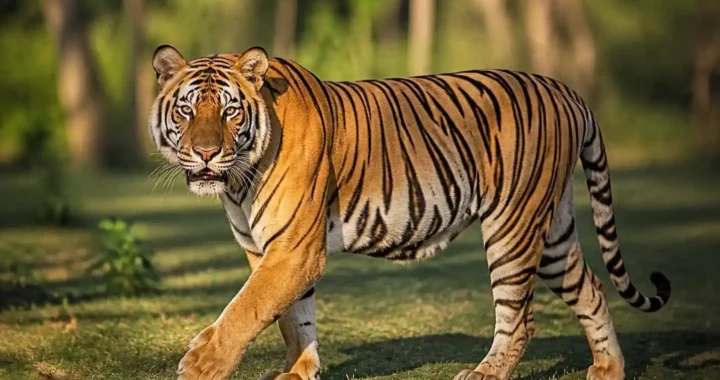
Tigers are generally much larger and naturally occur in Asia.
Both are powerful ambush hunters, but their prey communities and conservation circumstances differ.
Why rankings are unhelpful
There is no universal answer to which animal would win a fight.
Age, sex, condition, circumstances, and motivation would affect an encounter.
Comparing anatomy and ecology provides a more meaningful understanding of how each species survives.
25. Cultural Importance and Responsible Wildlife Viewing
Jaguars have a long place in the art, stories, and beliefs of peoples throughout the Americas.
Their imagery has represented power, authority, and relationships between human and natural worlds.
Respect cultural differences
These traditions are diverse. It would be inaccurate to describe every society as holding one uniform belief about jaguars.
Contemporary communities also have different experiences, including wildlife tourism, livestock losses, and participation in conservation.
Tourism opportunities
Wildlife viewing can create income connected to living jaguars.
Its value depends on responsible management and meaningful local benefits.
Allow natural behavior
A good encounter leaves the animal space to travel, rest, feed, or withdraw.
Crowding and attempts to provoke a response can change the behavior visitors came to observe.
Protect vulnerable locations
Den sites and dependent cubs require particular care.
Sharing detailed locations should consider whether doing so could expose animals to disturbance or harm.
Interpret one encounter carefully
An animal accustomed to boats or vehicles in one setting does not establish how all jaguars behave.
Responsible viewing combines appreciation with restraint. It allows people to observe the animal while preserving its choices and the conditions that make future encounters possible.
26. Frequently Asked Questions About Jaguars
What is the scientific name of the jaguar?
The jaguar’s scientific name is Panthera onca. It belongs to the cat family, Felidae, and is the only living member of Panthera native to the Americas.
Is the jaguar endangered?
Its global IUCN category is Near Threatened. Some regional populations face much greater risks, and national classifications can differ. A global category should not be used to describe every local population.
How many jaguars remain in the wild?
A widely cited 2018 modeling study estimated approximately 173,000, with substantial uncertainty. This is a dated model-based estimate, not a current individual count of all wild jaguars.
Does that estimate count mature individuals?
It should not automatically be described that way. Mature-individual estimates use specific reproductive definitions. Readers should check the original study’s categories before comparing its total with a mature-population figure.
Where do jaguars live?
They occur in parts of Mexico, Central America, and South America. Occasional individuals are recorded in the southwestern United States. Their distribution is fragmented, with large strongholds and smaller isolated populations.
Do jaguars live only in rainforests?
No. They also use wetlands, dry forests, wooded savannas, scrub, and other environments. Suitable prey, cover, water, and manageable mortality are more informative than a single habitat label.
Are black jaguars a separate species?
No. They are melanistic members of Panthera onca. Their dark coat is a color variation, and the underlying rosettes may remain visible in suitable light.
Is a black panther always a jaguar?
No. The informal name can refer to a melanistic jaguar or leopard. Geography and physical features are needed to identify the species.
How many jaguar subspecies are there?
Recent widely used classifications generally recognize no separate living subspecies. Jaguars are treated as monotypic, although geographic genetic variation remains important for conservation.
What do jaguars eat?
Their prey includes mammals, reptiles, fish, and birds. The main foods vary by location. A wetland population can have a very different diet from one in a dry forest.
Do jaguars eat caimans?
Yes, jaguars can kill caimans. This does not mean they attack every size of caiman or that such encounters are safe. Prey size and circumstances matter.
Can jaguars swim?
Yes. They are capable swimmers and frequently use waterways in suitable environments. Rivers and wetlands can provide travel routes and feeding opportunities.
Can jaguars climb trees?
Yes. Jaguars can climb, although climbing frequency varies. Their ability should not be confused with the leopard’s particularly well-known habit of hoisting meals into trees.
Are jaguars nocturnal?
They can be active at night, by day, and around dawn or dusk. Activity depends on prey, disturbance, temperature, and local conditions.
Do jaguars live alone?
Mostly. Mothers remain with cubs, mating pairs associate temporarily, and researchers have documented other repeated associations. “Solitary” describes a broad pattern rather than an absolute rule.
How long is a jaguar pregnant?
Pregnancy lasts approximately 100 days. Small variations occur. The mother gives birth in a sheltered location and provides the main direct care.
How many cubs do jaguars have?
One or two cubs are common, while up to four are reported. Observed litter size may be lower than the number originally born if losses occur before detection.
How long do cubs stay with their mother?
They commonly remain dependent for around 18–24 months, with variation. Eating meat occurs much earlier than the ability to find enough food independently.
How long do jaguars live?
Wild longevity is often summarized as approximately 12–15 years. Some survive longer, while many die younger. Jaguars under professional care can reach or exceed 20 years.
What is the difference between a jaguar and a leopard?
Jaguars are native to the Americas; leopards are native to Africa and Asia. Jaguars generally have stockier bodies, broader heads, shorter tails, and larger rosettes that often contain internal spots.
What threatens jaguars most?
Major pressures include habitat loss, fragmentation, prey depletion, retaliatory killing, and illegal trade. Severe fires and other environmental disruptions can intensify these pressures in particular landscapes.
Can jaguars recover?
Recovery is possible where threats are reduced and suitable habitat remains. It requires sustained protection, prey, connectivity, and cooperation with people sharing the landscape. Results vary among regions.