Leopard, The Secretive Spotted Hunter of Africa and Asia
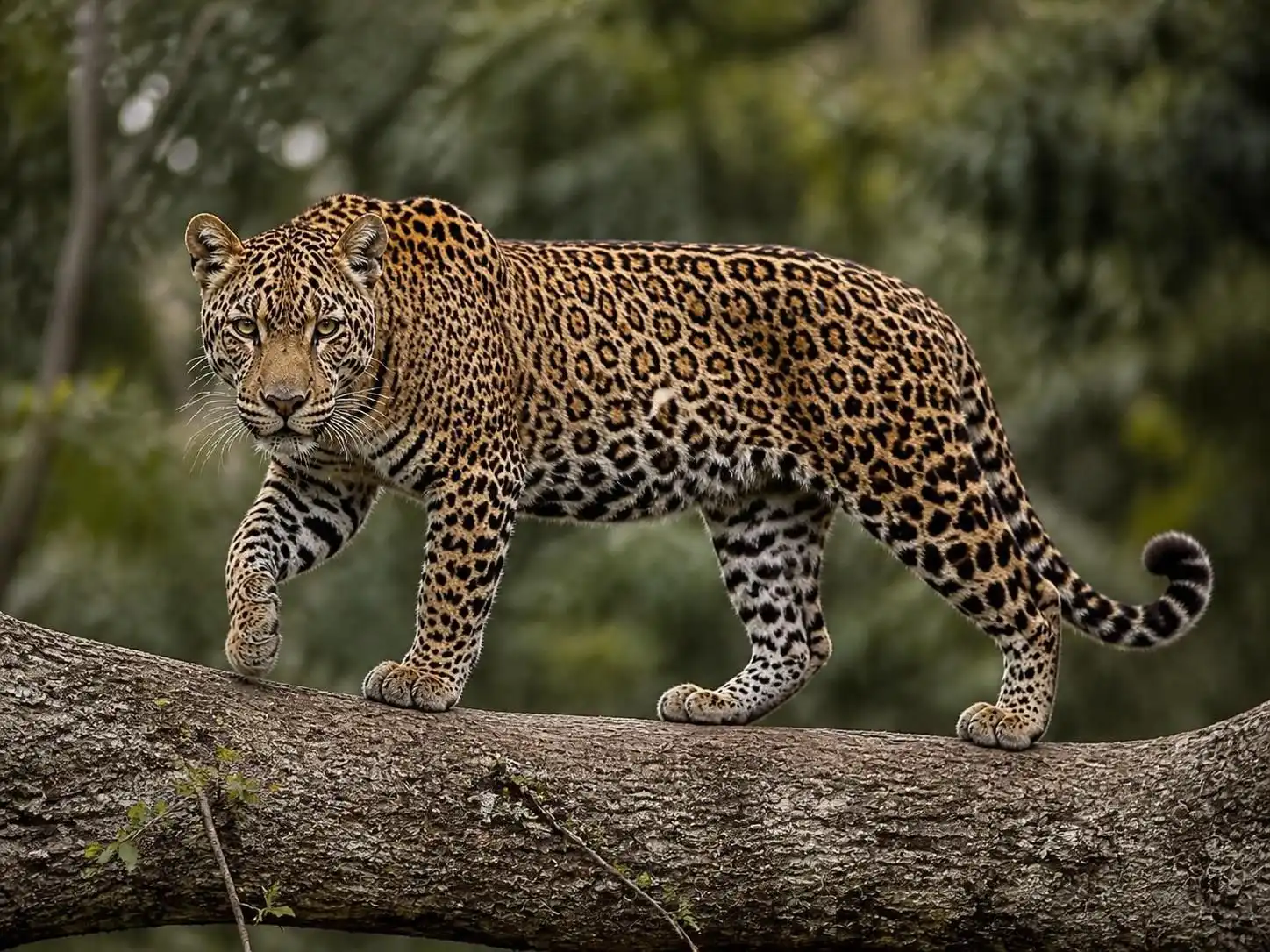
A leopard resting on a branch can appear almost effortless, its paws hanging loosely and its tail following the curve of the tree. That relaxed appearance hides an exceptionally demanding life. This cat must locate prey, approach without detection, complete a dangerous attack, and protect its meal from competitors—all while usually operating alone.
The leopard, scientifically known as Panthera pardus, combines strength with remarkable flexibility. It inhabits environments ranging from African woodlands to Asian forests and rugged mountain landscapes. Its spotted coat helps conceal its outline, while powerful limbs allow it to climb, restrain prey, and sometimes lift a carcass into a tree.
Yet adaptability does not make the leopard secure. Its broad distribution can disguise severe local declines. A species may remain widespread overall while disappearing from individual countries, becoming isolated in mountain ranges, or losing breeding populations that once connected larger strongholds.
Leopards also challenge simple labels. They are mostly solitary but communicate extensively. They are capable hunters but must avoid larger predators. They can live near people, yet their presence in a human-dominated landscape does not automatically mean they are safe.
This guide explores leopard identification, classification, distribution, diet, hunting, adaptations, reproduction, and conservation. It also explains the differences between leopards and other spotted cats, why black leopards are not a separate species, and why population estimates require careful interpretation.
Leopard Facts
| Feature | Leopard facts |
|---|---|
| Common name | Leopard |
| Scientific name | Panthera pardus |
| Animal group | Mammal |
| Family | Felidae |
| Genus | Panthera |
| Natural distribution | Africa and Asia |
| Diet | Carnivorous; prey varies considerably by region |
| Main hunting approach | Stalking and ambush |
| Typical adult social pattern | Mostly solitary |
| Distinctive markings | Dark rosettes on a pale yellow, golden, or tawny coat |
| Dark color form | Melanistic leopard, often called a black panther |
| Typical size difference | Males are generally larger than females |
| Gestation | Approximately 90–106 days |
| Common litter size | Usually two or three cubs, with variation |
| Independence | Often around 18–24 months, but variable |
| Longevity | Some wild individuals reach their teens; captive animals may exceed 20 years |
| Global conservation status | Vulnerable |
| Subspecies | Eight commonly recognized in recent conservation classifications; older sources often list nine |
1. What Is a Leopard?
A leopard is a large wild cat native to Africa and Asia. It belongs to the genus Panthera, alongside lions, tigers, jaguars, and snow leopards.
Its familiar appearance includes a muscular body, relatively short legs, a long tail, and a coat patterned with rosettes. These rosettes are irregular clusters of dark markings rather than simple, evenly spaced dots.
Leopards are predators that usually capture prey independently. That independence shapes much of their behavior. An animal must balance the energy gained from a meal against the effort and risk involved in obtaining it.
A leopard can be powerful enough to kill substantial prey while remaining vulnerable to larger carnivores. Its daily decisions therefore involve both hunting and avoiding danger.
The species is often described as adaptable because it uses varied habitats and prey. However, flexibility has limits. A leopard still needs food, concealment, suitable breeding conditions, and a landscape where mortality does not consistently exceed reproduction.
The most useful way to understand this animal is to connect those needs. Its coat, climbing ability, hunting style, and secretive behavior all help solve practical problems encountered during an independent predatory life.
2. Scientific Classification
The scientific name Panthera pardus identifies the leopard consistently across languages.
| Taxonomic rank | Classification |
|---|---|
| Kingdom | Animalia |
| Phylum | Chordata |
| Class | Mammalia |
| Order | Carnivora |
| Family | Felidae |
| Subfamily | Pantherinae |
| Genus | Panthera |
| Species | Panthera pardus |
The leopard is a mammal because it has characteristics including hair and milk production. It belongs to Felidae, the family containing both domestic cats and wild cats.
Its placement in Carnivora concerns evolutionary classification. Its actual diet is also strongly carnivorous, with animal prey supplying its nutritional needs.
Species and subspecies
The leopard’s species identity is widely accepted. Questions remain about how particular geographic populations should be grouped below the species level.
Subspecies classifications may use genetic evidence, physical variation, geography, and evolutionary history. Different studies can emphasize different evidence or apply different standards for recognizing a division.
Similar names, different animals
A snow leopard is a separate species, Panthera uncia. Clouded leopards belong to the genus Neofelis. Neither is a subspecies of the leopard.
Common names can suggest relationships without defining them precisely. Scientific names help prevent these misunderstandings.
3. Identification and Appearance
Rosettes and spots
Most leopards have a pale yellow, golden, or tawny coat covered with dark markings. Rosettes dominate much of the body, while smaller solid spots occur on areas such as the face and limbs.
The markings vary among individuals. Researchers can use clear photographs of these patterns to recognize particular animals.
A leopard’s left and right sides are not identical. Photographs showing both flanks can therefore be especially valuable when building an identification record.
Body shape
Leopards have a broad head, strong neck, muscular shoulders, and a long body. The tail is substantial and helps with balance during movement on narrow supports.
Their proportions differ from those of cheetahs, which have a more lightly built appearance associated with high-speed pursuit.
Geographic variation
Coat shade, hair length, and pattern appearance vary across the range. A leopard photographed in a cold northern environment may look different from one in a hot, dry landscape.
Lighting also changes appearance. Dense shade can make a coat seem darker, while bright sunlight can exaggerate its golden color.
Identification should therefore consider several features together. One blurry image of a spotted flank may not provide enough evidence to distinguish similar cats confidently.
4. Size and Physical Variation
Leopard size varies considerably with sex, geography, and individual condition.
Males are generally heavier and more robust than females from the same population. However, a large female from one region may overlap in size with a male from a smaller-bodied population.
A zoological reference gives commonly cited adult weight ranges of approximately 37–90 kilograms for males and 28–60 kilograms for females. Smaller populations and individuals occur, so these figures should not be treated as universal limits.
Why published measurements differ
Some measurements describe head-and-body length, while others include the tail. Comparing them without checking the method can create a false impression of disagreement.
Age and body condition also matter. A growing animal, an old adult, and a well-fed mature male do not represent the same biological category.
Interpreting photographs
A close camera can make an animal appear larger. A crouched posture can make its legs seem shorter, while a thick coat can conceal its underlying proportions.
Objects in the background are unreliable scale references unless their distance is known.
Size and hunting
Body size influences which prey a leopard can restrain, but it does not determine every hunting decision. Cover, opportunity, competition, and injury risk also affect prey selection.
The animal benefits from choosing a manageable meal, not simply the largest available target.
5. Leopard Subspecies
Recent conservation classifications commonly recognize eight leopard subspecies. Older references often list nine.
| Common name | Scientific name commonly used | Main geographic association |
|---|---|---|
| African leopard | P. p. pardus | Africa |
| Arabian leopard | P. p. nimr | Arabian Peninsula |
| Persian leopard | P. p. tulliana | Southwest Asia, Caucasus, and adjoining regions |
| Indian leopard | P. p. fusca | Indian subcontinent |
| Sri Lankan leopard | P. p. kotiya | Sri Lanka |
| Indochinese leopard | P. p. delacouri | Parts of Southeast Asia |
| Amur leopard | P. p. orientalis | Russian Far East and parts of China under the broader classification |
| Javan leopard | P. p. melas | Java |
Why nine appear in older sources
The North China leopard, P. p. japonensis, was traditionally listed separately. In the eight-subspecies arrangement, it is included within P. p. orientalis.
Persian leopard names also differ across publications. Names such as saxicolor appear in older literature, while tulliana is used in the broader recent arrangement.
What remains uncertain?
The IUCN Cat Specialist Group notes that additional genetic sampling and analysis are needed to clarify leopard subspecies boundaries.
The eight-subspecies framework is useful for describing recent conservation practice, but it should not be presented as the final possible interpretation of every population’s evolutionary history.
Conservation must also preserve meaningful geographic diversity. Grouping populations under one name does not mean animals from distant environments are interchangeable for breeding or release.
6. Black Leopards and Melanism
A black leopard is a leopard with melanism, a genetically influenced dark coloration.
The coat can look almost uniformly black, but the underlying rosette pattern may become visible in suitable light.
Is a black panther a separate species?
No. “Black panther” is an informal name commonly applied to melanistic leopards and melanistic jaguars.
The name alone does not establish the species. Geography and other physical features help determine which animal is being described.
Do black leopards behave differently?
They remain members of Panthera pardus. Their dark appearance does not make them a different kind of predator with a separate diet or social system.
Claims about temperament based only on coat color require evidence. A dramatic-looking animal should not automatically be described as more aggressive.
Why dark coloration occurs
Melanism occurs in some leopard populations and can be particularly conspicuous in discussions of Asian forest leopards. Its frequency varies.
A photograph of one dark animal does not reveal how common melanism is across the surrounding region.
The important distinction is between a color form and a taxonomic category. Coat variation contributes to the leopard’s diversity, but it does not independently justify a new species or subspecies name.
Did you know? A black leopard can still carry a visible rosette pattern. Strong side lighting may reveal markings that disappear in deeper shadow.
7. Where Leopards Live
Leopards have a broad natural distribution across Africa and Asia, but their remaining range is fragmented.
Historical occurrence should not be confused with confirmed present-day breeding populations. A country may retain a small population in one area while losing leopards elsewhere.
Africa
Leopards occur across parts of sub-Saharan Africa, including woodland, forest, savanna, and mountain environments.
Their status varies greatly. Some protected landscapes retain substantial populations, while other regions have experienced severe declines or disappearance.
Southwest Asia
Remaining populations occur in rugged landscapes associated with the Persian leopard and in parts of the Arabian Peninsula associated with the Arabian leopard.
These populations may be separated by extensive areas of unsuitable or unsafe habitat.
South Asia
Leopards occur in India and neighboring countries, while Sri Lanka supports its own island population.
Their presence can extend beyond formal reserves into agricultural and other shared landscapes.
Eastern and Southeast Asia
Surviving populations include Amur leopards in northeastern Asia, Javan leopards on Java, and highly threatened Indochinese populations.
A range map should distinguish current evidence from historical distribution. Broad shading can otherwise imply continuous occupation where only isolated pockets remain.
The practical conservation question is not simply whether a country has leopards. It is whether those animals form viable populations with opportunities to reproduce and exchange genes.
8. Leopard Habitat
Leopards use tropical forests, woodlands, savannas, scrub, mountains, and some arid environments.
Their requirements concern what a landscape provides rather than one particular vegetation label.
Forests and woodlands
Trees can provide resting places, concealment, and opportunities to store food. Ground vegetation helps during approaches to prey.
A forest’s appearance, however, does not reveal whether it contains enough prey or whether leopards are being killed.
Savannas
In savanna landscapes, trees, drainage lines, thickets, and rocky features can offer cover within a more open setting.
The distribution of these features affects how a leopard moves and hunts.
Mountains and dry country
Rugged terrain can provide shelter where large trees are scarce. Leopards are therefore not dependent on climbing a tree during every day of their lives.
Prey distribution and safe resting sites remain important in these environments.
Shared landscapes
Leopards sometimes use plantations, farms, and areas near settlements. Such use demonstrates behavioral flexibility, but it should not be equated with secure habitat.
A landscape can supply food while exposing animals to roads, traps, or retaliation.
Habitat quality must therefore include survival and breeding prospects. Presence alone is an incomplete measure, especially when animals repeatedly enter an area but fail to persist there.
9. Leopard Population Estimates Explained
There is no single precise, robust global leopard count that should be presented as the current total.
The species’ secretive behavior, enormous range, uneven survey coverage, and fragmented distribution make global abundance difficult to establish. Older widely repeated totals may rest on weak assumptions.
Examples of dated estimates
| Population or assessment | Estimate | Important limitation |
|---|---|---|
| India’s 2022 monitoring exercise, released in 2024 | Approximately 13,874 leopards | Covered a defined survey footprint rather than every leopard habitat in India |
| Arabian leopard assessment published in 2024 | Approximately 100–120 individuals | Subspecies estimate with considerable uncertainty |
| Mature Arabian leopards in that assessment | Approximately 70–84 | Separate mature-individual estimate; not additional animals |
India’s technical report states that its estimate represented roughly 70% of leopard-occupied area in 18 states. The number should therefore not be described as an exhaustive count of all leopards throughout the country.
The Arabian figures illustrate why total and mature estimates must be distinguished. Mature individuals are those considered capable of reproduction under the assessment’s definitions. doi.org
Wild versus captive animals
Captive leopards must be reported separately from wild populations. Animals in breeding programs do not automatically contribute to reproduction in natural habitats.
Comparing estimates
Before comparing two figures, check their dates, geographic coverage, age categories, and methods. A higher estimate can reflect broader coverage or better detection rather than equivalent biological growth.
10. Leopard Diet and Feeding
Leopards eat a wide variety of animals, but their diet changes substantially across regions.
Important prey can include antelope, deer, wild pigs, primates, hyraxes, and smaller mammals. Birds and other animals may also be taken.
Local prey matters
A forest leopard and a mountain leopard may rely on very different food resources. A species-wide list of prey should not be interpreted as the normal menu of every individual.
Researchers also distinguish between a prey species being recorded occasionally and supplying a large proportion of food.
Size and opportunity
Medium-sized prey can offer a useful balance between nutritional return and handling difficulty.
Large prey may provide more food, but it can be dangerous to capture and difficult to protect from competitors.
Small prey can be worthwhile when abundant or easily caught. Flexibility allows leopards to respond to opportunities, but it does not eliminate the need for sufficient food.
Scavenging
Leopards may consume carrion when opportunities arise. They are capable hunters rather than animals restricted to either hunting or scavenging exclusively.
Feeding patterns
Food intake is irregular. An animal may feed repeatedly from one carcass and then spend time searching for another opportunity.
A fixed daily ration describes managed feeding more readily than wild behavior. In nature, meal size and timing depend on success, competition, and the demands of dependent cubs.
11. How Leopards Hunt
Leopards usually depend on concealment and a close approach.
Locating prey
They search using several senses and information from previous experience. Movement, sound, and the arrangement of cover can all influence an opportunity.
Finding prey is only one part of hunting. The animal must also decide whether an approach is possible.
Stalking and ambush
A leopard may lower its body and move slowly, using vegetation or terrain to reduce visibility.
When close enough, it launches a short attack. This differs from the sustained high-speed pursuit associated with cheetahs.
Not every encounter involves a prolonged stalk. Dense cover can create sudden opportunities when prey appears nearby.
Restraining the prey
Forelimbs and claws help hold the animal while the leopard applies a killing bite. The exact sequence depends on prey size and how the encounter unfolds.
A struggle carries risks, especially when the prey can kick, bite, or strike with horns.
Choosing where to hunt
The place with the most prey is not necessarily the easiest place to capture it. Cover and escape routes can influence catchability.
This explains why prey abundance alone does not describe hunting quality.
Failed attempts
Unsuccessful hunts are part of predatory life. A leopard may withdraw rather than continue an unfavorable chase.
That decision can conserve energy and reduce injury risk, leaving the animal able to exploit another opportunity.
12. Tree Climbing and Food Storage
Leopards are famous for carrying carcasses into trees. This behavior is a form of caching: storing or securing food for later use.
Why lift a meal?
A carcass left on the ground may be discovered by a stronger competitor. Moving it into a tree can reduce the chance of losing it, particularly to animals that cannot climb effectively.
Keeping a meal allows more feeding time and preserves the value of the original hunting effort.
What research shows
A study in South Africa’s Sabi Sand Game Reserve examined 2,032 prey items killed by 104 leopards during 2013–2015. Leopards hoisted 51% of kills in that dataset.
The findings supported protection from food theft as an important explanation for hoisting. This was a study of one population, not a universal percentage for leopards everywhere.
Why not every kill goes into a tree?
Suitable trees may be unavailable. A carcass may be too large, or the local competitive situation may favor feeding on the ground.
Leopards can also conceal food in vegetation or other sheltered places.
Trees are not perfect protection
Some competitors can climb, and carcasses can fall.
Hoisting reduces certain risks rather than removing every threat. Its value lies in improving the odds that a leopard retains enough of a hard-earned meal to justify the hunt.
13. Leopard Adaptations
Several physical features work together to support leopard survival.
Camouflage
Rosettes interrupt the body’s outline against irregular backgrounds. Their effectiveness depends on light, vegetation, posture, and movement.
Remaining still at the right moment can be as important as the pattern itself.
Muscular forequarters
Strong shoulders and forelimbs help with climbing and prey handling. These tasks require controlled pulling and gripping rather than speed alone.
Claws and paws
Retractile claws provide purchase during climbing and attacks. The paws also allow controlled movement across uneven ground.
Tail and balance
The long tail assists balance, particularly on branches. It does not make every climb safe, but it contributes to body control.
Teeth and feeding structures
Canines help grip prey, while specialized cheek teeth process flesh. The rough tongue assists grooming and handling food.
Sensory systems
Forward-facing eyes support depth perception. Hearing helps detect movement, while whiskers provide close-range tactile information.
These abilities are useful together. A leopard must detect an opportunity, judge distance, move accurately, and control contact.
Limits of adaptation
No anatomical feature compensates indefinitely for the loss of prey or repeated human-caused mortality.
The leopard’s success reflects a workable relationship between its abilities and its surroundings. Conservation must preserve that relationship rather than assuming adaptability will solve every problem.
14. Behavior and Communication
Leopards generally live independently, but they are not socially unaware.
Solitary living
The most familiar long-lasting association is a mother with dependent cubs. Mating pairs associate temporarily.
Adults may encounter neighbors or tolerate particular animals under certain circumstances, but stable cooperative groups are not the usual pattern.
Scent communication
Urine, scrapes, and other scent marks provide information about presence and reproductive condition.
Such signals allow communication without immediate physical contact. This matters when direct encounters can lead to injury.
Calls
Leopards produce several sounds, including a characteristic rasping call often compared with sawing.
The sound can advertise presence across a landscape. Close encounters involve other vocalizations and body signals.
Daily activity
Many leopards are active at night or around dawn and dusk, but daytime activity also occurs.
Their schedules can change with prey, temperature, competitors, and people. Calling them strictly nocturnal oversimplifies their flexibility.
Resting and vigilance
A resting leopard may still monitor its surroundings. A tree branch or concealed ground site can provide both shelter and opportunities to detect approaching animals.
Behavior therefore balances feeding, movement, communication, and risk. An animal that is difficult to see may still be using a landscape regularly and responding to events beyond human observation.
15. Home Ranges and Dispersal
A home range is the area an animal uses during its normal activities. A territory is an area it defends. These terms describe related but distinct ideas.
Range size
Leopard home ranges vary enormously. Food, terrain, sex, neighboring leopards, and human pressures all influence space use.
Males often range more widely than females, and a male’s range may overlap several female ranges.
A small range is not automatically evidence of good habitat, nor is a large range automatically evidence of poor habitat. Interpretation requires information about resources and behavior.
Dispersal
Young leopards eventually become independent and may leave their birth area.
Dispersal connects populations by allowing animals to find new breeding opportunities. It can also expose them to unfamiliar roads, settlements, and resident adults.
Connectivity
A passage between habitat patches needs to function in practice. A strip of vegetation may look connected on a map while containing barriers or high mortality risks.
The useful question is whether animals can move through it and survive.
Planning beyond reserves
Protecting breeding habitat and movement routes serves different but complementary purposes.
A secure reserve may produce young leopards, but their future depends partly on the surrounding landscape. Conservation planning should therefore consider where those animals can establish themselves after leaving.
16. Leopard Reproduction
Leopards do not usually maintain permanent breeding pairs. Both males and females may mate with more than one partner.
Courtship
A receptive female may increase scent marking and calling. Males and females can remain together for several days during mating.
The timing of reproduction varies among regions. Some populations breed throughout the year, while local patterns can reflect environmental conditions.
Maturity versus successful breeding
Sexual maturity and actual reproductive success are different.
An animal may become physiologically capable of reproduction before it secures the conditions needed to raise young successfully.
For males, access to females and established space can be important. For females, food, safety, and physical condition affect the demands of pregnancy and care.
Pregnancy and birth
Gestation lasts approximately 90–106 days. Two or three cubs are common, although litter size varies.
The female gives birth in a sheltered place, which may include dense vegetation, rocky cover, or a suitable cavity.
Breeding intervals
The interval between litters depends partly on the outcome of the previous litter. Raising surviving young requires a prolonged investment.
A female that loses her cubs may return to breeding sooner.
Population recovery therefore depends on more than the number of pregnancies. Surviving offspring must eventually enter the breeding population themselves.
17. Leopard Cubs and Development
Leopard cubs begin life small, dependent, and unable to follow their mother through the landscape.
Early care
The mother provides milk, protection, and access to food. She must leave to hunt, creating periods when the cubs remain concealed.
Their safety depends on the den, the surrounding environment, and the mother’s ability to return.
Growing independence
Cubs begin eating meat before nursing ends. They gradually accompany their mother and gain experience around food and prey.
Weaning does not equal independence. A cub can eat meat while remaining unable to obtain enough food consistently.
Learning through practice
Play includes stalking, wrestling, pouncing, and climbing. These behaviors help develop coordination and physical control.
Hunting competence develops gradually. Successful participation in one encounter does not mean a young leopard can immediately support itself.
Leaving the mother
Independence often occurs during the second year, with considerable variation.
Some young females remain near their birth area, while males often disperse farther.
Why cub survival matters
A photograph of cubs demonstrates reproduction but not recruitment into the adult population.
Following their survival provides a stronger measure of population prospects. Conservation that protects a mother but leaves her offspring without safe dispersal opportunities addresses only part of the life cycle.
Did you know? Eating meat, catching prey, and living independently are separate developmental milestones for a leopard cub.
18. Lifespan and Survival
Leopards can survive into their teens in the wild, and some captive individuals live beyond 20 years. However, lifespan figures depend on what is being measured.
Average versus maximum
A maximum recorded age describes an exceptional survivor. An average includes animals that die earlier.
Survival from birth also differs from expected remaining life after an animal has already reached adulthood.
Wild hazards
Hunting injuries, disease, competition, conflict, and accidental deaths all affect longevity.
Dispersing young animals may face different risks from established adults. Females supporting cubs also face demands that differ from those of solitary individuals.
Human influence
Survival can vary between protected and unprotected areas. Where persecution or other human-caused mortality is high, an animal’s physical ability to live longer may never be realized.
Captive longevity
Reliable feeding and veterinary care can extend life under professional management.
This does not make captive and wild populations ecologically equivalent. Their reproductive management, risks, and environmental roles differ.
For conservation, survival should be examined across age and sex categories. Losing several breeding females may have different consequences from losing the same number of independent young males.
The relevant question is how mortality affects the population’s capacity to replace itself over time.
19. Predators and Competitors
Leopards occupy an important predatory role, but they do not dominate every carnivore community.
Larger cats
Lions can kill leopards in Africa, and tigers can kill them in Asia.
Avoidance may involve differences in activity, prey, resting sites, or use of cover.
Hyenas and other carnivores
Spotted hyenas can take leopard kills. Their ability to locate food creates pressure on leopards to conceal or elevate carcasses.
Other predators may also compete for prey or create danger during encounters.
Other leopards
Adult leopards can fight, and cubs may be killed by other individuals. These interactions affect social stability and reproductive success.
Coexistence
Competition does not mean two species cannot share a landscape.
Research in India has documented ways tigers, leopards, and dholes partition activity and resources. The details are local rather than a single rule applying everywhere.
Interpreting “apex predator”
A leopard may be the largest resident predator in one area while occupying a different position where lions or tigers occur.
Ecological role depends on context. It is more informative to describe actual interactions than to assign an unchanging rank based only on body size.
The animal’s success often depends on avoiding costly confrontation while continuing to obtain food.
20. Ecological Importance
Leopards influence ecosystems through predation, competition, and the food left available to other animals.
Effects on prey
Predation removes individual prey animals and may influence how surviving animals use space.
The wider outcome depends on food availability, weather, disease, other predators, and human hunting.
It would be too simple to claim that removing leopards always produces the same ecological chain reaction.
Food for other species
A leopard carcass cache or abandoned meal can become a food source for scavengers.
What represents a lost meal for one predator may provide an opportunity for another animal.
Protecting landscapes
Conserving leopard habitat can benefit many organisms sharing the same environment.
However, leopard presence is not a complete biodiversity assessment. Some species require habitats or management actions that leopard-focused protection does not provide.
Cultural and economic importance
Leopards appear in stories, art, symbols, and wildlife tourism. These relationships can encourage protection, but their effects depend on how benefits and costs are distributed.
A community that experiences livestock losses may have a different relationship with leopards from visitors who encounter them during a short safari.
Effective conservation recognizes both perspectives. The ecological role of the animal and the lived experience of nearby people are connected parts of the same landscape.
21. Threats to Leopards
Habitat loss
Conversion of natural areas can remove breeding habitat and concealment.
Fragmentation can then isolate the remaining patches, making movement and genetic exchange more difficult.
Prey depletion
Hunting of wild prey can reduce the food available to leopards even where vegetation remains.
A landscape may retain trees while losing much of the animal community that supports predators.
Retaliatory killing
Livestock losses can lead to trapping, poisoning, or other killing.
Prevention requires attention to the circumstances of attacks rather than assuming all conflict has the same cause.
Snares
Wire snares can catch leopards even when intended for other animals. They can cause severe injuries or death.
Research documenting the rescue and monitoring of a snared Sri Lankan leopard illustrates both the danger and the specialist work required after an animal is found.
Illegal trade
Leopards are killed for skins and other body parts. Trade pressure can interact with weak enforcement and limited monitoring.
Regional collapse
The Indochinese leopard demonstrates how quickly a regional situation can deteriorate. A 2023 study described severe losses in Cambodia and identified rising human pressures, especially snaring, as a major concern.
Multiple pressures
These threats rarely operate in isolation. Habitat loss can increase access for hunting, prey depletion can intensify conflict, and conflict can further reduce an already isolated population.
22. Leopard Conservation
The leopard is globally classified as Vulnerable. Individual subspecies can face greater extinction risk, including Critically Endangered populations.
A global category should therefore not be used to minimize a regional emergency.
Protect habitat and prey
Effective protection includes the animals leopards eat and the places where they reproduce.
Maintaining habitat condition is as important as retaining a boundary on a map.
Improve livestock protection
Secure nighttime enclosures, attentive herding, and locally suitable husbandry can reduce losses.
African Wildlife Foundation describes predator-resistant livestock enclosures as part of its work with communities. Such measures address a practical cause of retaliation.
Reduce demand for skins
Panthera’s Furs for Life programs work with cultural leaders and communities to provide synthetic alternatives to real leopard skins.
The approach recognizes that durable change depends partly on social acceptance. Replacing a material can preserve cultural expression while reducing pressure on wildlife.
Support small populations
Highly threatened populations may require coordinated habitat protection, monitoring, genetic management, and carefully designed breeding programs.
Any proposed release needs suitable habitat, prey, health assessment, and long-term support.
Evaluate results
Useful measures include survival, breeding, recruitment, connectivity, conflict, and the persistence of prey.
Counting activities—such as patrols or workshops—is not enough on its own. Conservation should examine whether those activities improve conditions for animals and people.
23. How Scientists Study Leopards
Leopards are difficult to monitor because they are secretive and often occur at low densities.
Camera traps
Remote cameras photograph animals as they pass. Researchers identify individuals using markings and analyze repeated detections.
The number photographed is a minimum observed count, not automatically the total population.
Statistical estimation
Capture–recapture approaches account for animals that were present but not detected.
A credible estimate should explain its survey area, sampling period, assumptions, and uncertainty.
GPS tracking
Collars can reveal movement, habitat use, and responses to roads or settlements.
Because only selected animals are collared, researchers must consider how representative those individuals are.
Genetics
DNA can help investigate identity, relatedness, and connectivity.
Genetic work complements field monitoring rather than replacing it.
Community knowledge
Residents can provide information about sightings, livestock losses, and local attitudes.
Such information needs respectful collection and careful interpretation. A reported sighting is valuable evidence, but it may require verification.
Long-term records
Repeated studies are particularly useful because short surveys can miss changes in survival or breeding.
Citizen reporting initiatives, such as the Cape Leopard Trust’s data portal, can also support monitoring when observations are recorded with appropriate context.
24. Leopard, Jaguar, Cheetah, and Snow Leopard Compared
| Feature | Leopard | Jaguar | Cheetah | Snow leopard |
|---|---|---|---|---|
| Scientific name | Panthera pardus | Panthera onca | Acinonyx jubatus | Panthera uncia |
| Native region | Africa and Asia | Americas | Mainly Africa, with a small Asian population | Asian mountains |
| Familiar pattern | Rosettes | Larger rosettes, often with internal spots | Mainly solid spots | Large rosettes on a pale grayish coat |
| Typical build | Muscular, long-tailed | Particularly robust | Slender, long-legged | Thick-coated, long-tailed |
| General hunting emphasis | Stalking and ambush | Stalking and ambush | High-speed pursuit | Stalking and ambush in mountain terrain |
Leopard versus jaguar
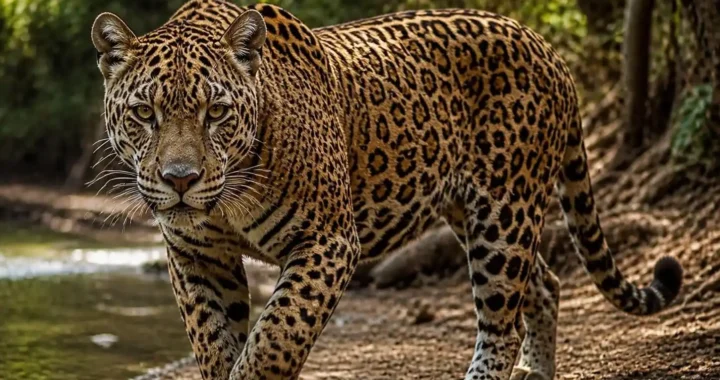
Jaguars are generally more heavily built, and their rosettes often contain internal spots.
No single marking is an absolute identification rule. Geography and overall proportions provide important context.
Leopard versus cheetah
Cheetahs have a lighter frame, long legs, and characteristic dark facial tear marks.
Leopards are more robust and strongly associated with climbing and ambush.
Leopard versus snow leopard
Snow leopards are a separate mountain-adapted species. Their thick coat and very long tail contribute to a different appearance.
The shared word “leopard” should not obscure the taxonomic distinction.
These comparisons work best as identification guides. They should not be turned into rankings that imply one animal is universally stronger, better adapted, or more successful than another.
25. Responsible Leopard Viewing
Seeing a wild leopard can be memorable, especially because the animal may remain concealed even in areas where it lives regularly.
Allow space
Viewing should leave the animal room to move, rest, and choose its own route.
Crowding can interfere with behavior and reduce the quality of the observation.
Protect natural behavior
An encounter is most informative when the leopard continues its normal activity.
Attempts to attract its attention can change the scene being observed.
Respect cub sites
Dens and young cubs are sensitive locations. Repeated disturbance can create unnecessary pressure on a mother.
Detailed location sharing should also consider whether it could expose vulnerable animals.
Choose responsible operators
A useful wildlife experience includes knowledgeable guidance and respect for local rules.
The quality of a sighting is not measured only by distance. Watching undisturbed behavior can reveal more than obtaining a closer photograph.
Understand what one encounter shows
A leopard visible beside a road may be accustomed to vehicles in that setting. That does not establish that all leopards behave similarly or that approaching one on foot is appropriate.
Responsible interpretation preserves the difference between a particular encounter and a species-wide rule.
26. Frequently Asked Questions About Leopards
What is the scientific name of the leopard?
The leopard’s scientific name is Panthera pardus. It belongs to Felidae, the cat family, and the genus Panthera. Snow leopards and clouded leopards are separate species, despite sharing part of the common name.
Are leopards endangered?
The leopard is globally classified as Vulnerable, which is a threatened category. Some subspecies face greater risk and are classified as Endangered or Critically Endangered. The global category should always be distinguished from a particular population’s condition.
How many leopards remain in the world?
A precise, reliable global total is not established. Survey coverage is uneven, and some older figures are poorly supported. Regional estimates are more useful when accompanied by their dates, geographic coverage, methods, and uncertainty.
How many leopards live in India?
The 2022 monitoring exercise estimated approximately 13,874 leopards within its defined coverage. The results were released in 2024. This was not an exhaustive count of every leopard throughout all habitats and regions of India.
How many leopard subspecies are recognized?
Eight are commonly recognized in recent conservation classifications. Older references often list nine because they recognize the North China leopard separately. Genetic research continues, so the framework should be identified rather than presented as permanently settled.
Is a black panther a leopard?
It can be. The informal name often describes a melanistic leopard in Africa or Asia, but it can also describe a melanistic jaguar in the Americas. It is not a separate scientific species.
Can you see spots on a black leopard?
Yes. The underlying rosette pattern can remain visible under suitable lighting. In deep shadow the animal may appear uniformly black, while stronger light reveals the markings more clearly.
What do leopards eat?
They eat varied animal prey, including antelope, deer, wild pigs, primates, hyraxes, and smaller mammals. The importance of each prey type depends on the region. A species recorded once is not necessarily a major food source.
Do leopards always take food into trees?
No. Hoisting depends on suitable trees, carcass size, competitors, and local conditions. Leopards can feed on the ground or conceal food elsewhere. Tree storage is an important strategy rather than a universal requirement.
Can a leopard carry an animal heavier than itself?
Leopards can hoist substantial carcasses, including some exceeding their own weight. However, carrying ability varies with the individual, the prey, and the climb. A dramatic example should not become a fixed lifting limit for the species.
Are leopards nocturnal?
They are often active at night and around dawn or dusk, but daytime activity occurs. Prey, heat, disturbance, and competitors influence their schedules. Their flexibility is more accurately described than an absolute nocturnal label.
Do leopards live alone?
Adults generally live independently. Mothers remain with dependent cubs, and mating pairs associate temporarily. Solitary living does not mean animals never interact or lack social communication.
How long is a leopard pregnant?
Gestation lasts approximately 90–106 days. The exact duration varies. A litter commonly contains two or three cubs, although both smaller and larger litters occur.
How long do cubs stay with their mother?
They often remain dependent into their second year, commonly around 18–24 months, with substantial variation. Learning to eat meat occurs much earlier than learning to obtain enough food independently.
Do male leopards raise cubs?
The mother provides the main direct care. Regular shared parenting is not the standard pattern. Male interactions vary, and some males can pose a threat to dependent cubs.
How long do leopards live?
Some wild individuals reach their teens. Leopards under professional care may exceed 20 years. Average survival, maximum age, and expected adult lifespan are different measurements and should not be treated as equivalent.
What animals kill leopards?
Lions and tigers can kill leopards, and other carnivores can threaten adults or cubs. Other leopards also cause mortality. Human-caused killing is a major conservation concern across many populations.
Can leopards swim?
Yes. Leopards can swim, although how frequently they enter water depends on local circumstances. Swimming ability does not mean that all rivers or water crossings are safe.
Can leopards live near people?
Yes, some populations use shared agricultural and settled landscapes. Their presence does not automatically indicate safety or stability. Long-term coexistence depends on prey, livestock management, local attitudes, and effective responses to problems.
Why are leopards important?
They influence prey communities, interact with other predators, and provide food opportunities for scavengers. Protecting their habitat can benefit other wildlife, while their cultural and tourism significance can support conservation when managed responsibly.